
Nicolas Cage: Career, Creative Choices, and Personal Growth
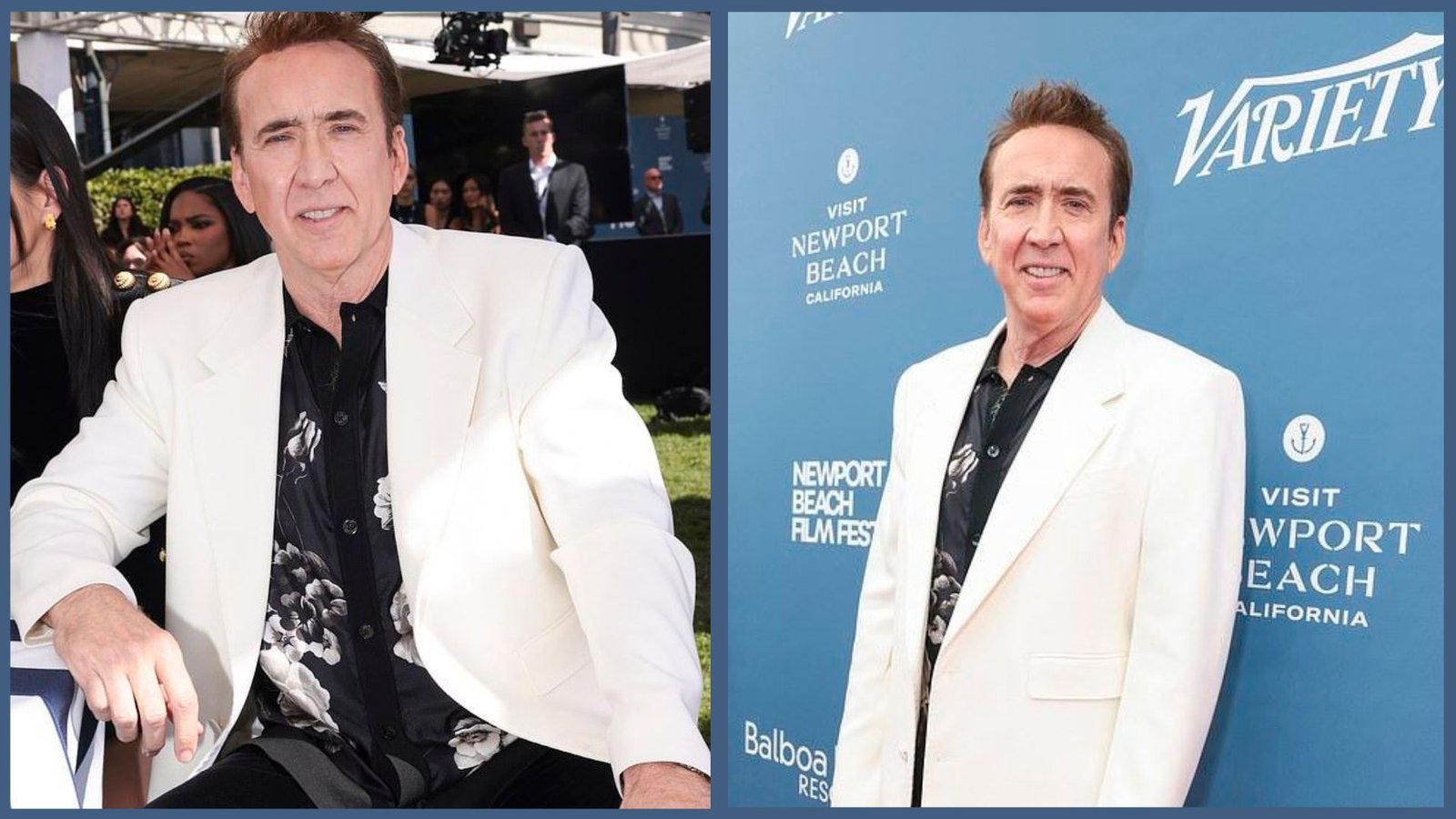
Nicolas Cage has built a public identity that is difficult to compare with anyone else’s. His expressive style, unpredictable decisions, and willingness to take creative risks have made him one of the most recognizable figures in American entertainment. Some people admire his intensity, while others are fascinated by the unusual public image surrounding him. Beneath that reputation, however, is a committed professional who has spent decades exploring different ways to communicate emotion. His journey also reflects independence, resilience, generosity, and a gradual shift in how he wants the public to understand him. Cage’s filmography is a testament to his eclectic tastes, ranging from the surreal and avant-garde to mainstream blockbusters, showcasing an actor unafraid to embrace contradictions. This versatility not only highlights his talent but also speaks to his desire to challenge audience expectations, often blurring the lines between comedy and tragedy, horror and romance. As he navigates through various genres, Cage invites viewers to embark on a journey with him, one that often feels deeply personal and reflective of his own experiences. His recent projects, in particular, reveal a more introspective side, suggesting that he is not just performing roles but also grappling with his own identity and legacy.
Early Life and Family Background
Nicolas Cage was born Nicolas Kim Coppola on January 7, 1964, in Long Beach, California. Creativity and education were both present in his childhood environment. His father, August Coppola, worked as a literature professor, while his mother, Joy Vogelsang, was a dancer and choreographer. Growing up around people interested in language, movement, and artistic expression gave him early exposure to several forms of creativity. His wider family also included established entertainment professionals, which meant public achievement was never entirely unfamiliar.
Being connected to a prominent family brought opportunities, but it also created a difficult question about identity. Cage understood that people might judge him through his surname before examining his abilities. Instead of relying entirely on the family name, he became determined to build an independent reputation. That desire influenced one of the most important decisions of his early career and helped establish the individualistic attitude that later defined his public life.
Discovering His Individual Identity
Cage began using a different surname when he was still young. The choice allowed him to separate his professional identity from the Coppola family and reduce assumptions that his progress came only through relatives. He selected “Cage” partly because he admired the comic-book character Luke Cage. The name carried a feeling of strength and independence that suited the identity he hoped to create.
This change was more than a marketing decision. It represented his wish to receive criticism, praise, and opportunities on his own terms. Famous family connections can become a burden when observers constantly compare one relative with another. Cage responded by deliberately taking a separate path. His later choices continued to reflect that same instinct: he rarely seemed interested in becoming a predictable extension of another person’s reputation.
Building a Distinctive Public Image
From the beginning, Nicolas Cage understood that memorable public figures often have a clear identity. He did not attempt to appear completely ordinary or carefully polished. Instead, he embraced intensity, unusual interests, bold statements, and expressive behavior. Over time, the public began to associate his name with surprise. Even people who knew little about his professional background could recognize his energetic expressions and unconventional personality.
Cage later acknowledged that he had actively helped shape this image when he was younger. He wanted to make a strong impression and did not mind appearing wild, mysterious, or eccentric. Age gradually changed his priorities. He became less interested in feeding every exaggerated story and more interested in showing the thoughtful person behind the reputation. That development reveals an important part of his personal growth: creating an image may attract attention, but controlling it becomes harder once the public begins adding its own assumptions.
Dedication and Strong Work Ethic
Although discussions about Cage often focus on his personality, his consistency deserves equal attention. He has remained professionally active for decades, working through changing public tastes, criticism, and periods of renewed appreciation. Maintaining that level of activity requires stamina. It also demands preparation, punctuality, and the ability to cooperate with many different creative teams.
Cage approaches his work with considerable seriousness. His most energetic moments may look spontaneous, but he has explained that many of his decisions are intentional. He studies physical movement, vocal delivery, literature, visual art, and human behavior to develop new forms of expression. This preparation helps explain why his style can shift so sharply. He does not simply repeat one familiar technique. He treats each challenge as an opportunity to test another creative approach.
Creative Thinking and Personal Expression
One of Cage’s most notable qualities is his refusal to accept a narrow definition of believable expression. Many performers aim for quiet realism, but Cage has also explored heightened movement, exaggerated emotion, and deliberate unpredictability. He developed the term “Nouveau Shamanic” to describe aspects of this approach. At its heart, the idea involves using imagination freely and avoiding the embarrassment that can prevent a person from making a bold choice.
This philosophy does not mean that every decision must be loud. It means that expression should remain alive, responsive, and emotionally committed. Cage is willing to risk looking strange if the choice communicates something valuable. That courage has sometimes divided observers, yet it has also protected him from becoming forgettable. His work reminds creative people that originality rarely emerges from constantly worrying about appearing safe.
Challenges That Shaped His Perspective
A long public career naturally brings uneven periods. Cage has experienced strong praise, sharp criticism, personal pressure, and widespread misunderstanding. At times, public discussion focused so heavily on stories about his lifestyle that his professional discipline received less attention. He also became a frequent subject of online jokes and short reaction images, introducing his expressions to audiences who had little knowledge of the original context.
Rather than disappearing when public attitudes shifted, Cage continued working. Persistence allowed later audiences to reconsider his abilities with greater curiosity. He did not respond to every difficult period by abandoning the qualities that made him distinctive. Instead, he refined them. That response offers a useful lesson: criticism can encourage improvement without requiring a person to erase their identity.
Personal Growth Through Experience
Cage’s comments in later interviews suggest that he has become more reflective about fame. As a young man, he enjoyed creating an unpredictable image. With maturity, he began describing a quieter private temperament. He has explained that the dramatic public version of Nicolas Cage does not completely represent his everyday life. Much of his time away from work is calm and private.
This contrast shows how personal priorities can evolve. Younger people often feel pressure to announce their individuality as loudly as possible. Experience can replace that urgency with confidence. Cage no longer needs every headline to prove that he is unusual. His established reputation gives him room to speak more openly about discipline, family, creativity, and the peaceful routines that exist behind his famous name.
Generosity and Humanitarian Contributions
Nicolas Cage has also used his resources and visibility to support humanitarian causes. In 2006, Amnesty International announced that he was contributing $2 million to establish assistance for former child soldiers. The initiative supported rehabilitation shelters, medical treatment, psychological care, and reintegration services. This substantial commitment addressed an extremely serious issue affecting vulnerable children in areas of conflict.
The United Nations later recognized Cage for his humanitarian efforts. In 2009, he received the United Nations Correspondents Association’s Global Citizen of the Year Award for Humanitarian Achievements. He was also appointed a Goodwill Ambassador for Global Justice with the United Nations Office on Drugs and Crime. These roles drew attention to organized crime, human trafficking, access to justice, and other international concerns. His charitable record provides a meaningful counterbalance to the eccentric stories that often dominate public conversation about him.
Influence on Popular Culture
Few entertainers have developed an online presence as unusual as Cage’s. His facial expressions and highly emotional moments have circulated widely as reaction images, jokes, and references. This digital visibility helped younger generations recognize him, even when they encountered his work years after it was created. In an age when public relevance can disappear quickly, his image has remained remarkably durable.
Online attention can flatten a complex person into a single joke, but it can also encourage curiosity. Many people initially discover Cage through a humorous image and later become interested in his creative philosophy. His influence therefore moves in two directions. He contributes serious ideas about expression, while internet culture reshapes those ideas into accessible symbols. The result is a public identity that remains both respected and playfully discussed.
Relationship With Fans and Public Attention
Cage’s appeal comes partly from his refusal to present a perfectly controlled personality. Fans often sense that he genuinely enjoys experimentation and does not treat every public appearance as a carefully rehearsed commercial exercise. His willingness to discuss comic books, animals, unusual inspirations, and imaginative theories gives interviews an unpredictable quality. That openness makes him seem more personal, even when his experiences differ greatly from those of an ordinary reader.
At the same time, he has become more careful about how stories shape his reputation. Once a humorous claim spreads online, later explanations rarely travel as far. Cage appears to understand this tension better now than he did at the beginning of his career. He can appreciate the affection behind the jokes while still asking audiences to recognize the discipline and thought within his work.
Lessons From Nicolas Cage’s Journey
The clearest lesson from Cage’s life is the value of developing an identity rather than borrowing one. Changing his professional name helped him establish independence, but the deeper achievement came from making choices that supported that independence. He accepted the risk of criticism because a completely safe approach would have contradicted his creative values.
His career also shows that public opinion is not permanent. Praise can fade, criticism can soften, and misunderstood work can receive a more generous response later. What matters is the ability to keep learning without surrendering every distinctive quality. Cage remained active, adjusted his priorities, and allowed maturity to deepen rather than erase his individuality.
Interesting Facts About Nicolas Cage
Nicolas Cage’s original surname was Coppola, but he adopted Cage to establish a separate professional identity. His chosen name was partly inspired by the comic-book hero Luke Cage. His father taught literature, which helped create an intellectually rich environment during his early years. Cage has described his expressive method with the phrase “Nouveau Shamanic,” reflecting his interest in imagination and unrestricted creative energy. Beyond his professional accomplishments, the United Nations formally recognized his humanitarian contribution and appointed him to a goodwill role focused on global justice.
Conclusion
Nicolas Cage is more complex than the exaggerated expressions and eccentric stories often associated with his name. His journey combines strong professional discipline, creative courage, independence, humanitarian service, and an evolving understanding of fame. He intentionally built an identity that could not easily be confused with anyone else’s, then learned how to live with the attention that identity produced.
His experience shows that originality can attract both admiration and misunderstanding. It also demonstrates that personal growth does not require abandoning the qualities that made someone distinctive. Cage has continued to change while preserving his curiosity and willingness to take risks. That combination has allowed him to remain a memorable, influential, and frequently discussed figure across several generations.
Read more: Will Ferrell: Humor, Creativity, and Lasting Influence