
Students Live Their Whole Research Life Online — Which Is Exactly Why They’re a Target

A typical week at university now runs almost entirely through a screen. Lecture notes, reading lists, library databases, group projects, submission portals, and the endless logins that tie them together all depend on online access. Add the cafés, halls of residence, and library Wi-Fi networks that students move between every day, and you have a person who spends an enormous amount of time online, often without thinking much about how exposed they are.
That combination of heavy online activity and light security habits is exactly what attackers look for. It is also one reason the education sector has become such an attractive target.
Universities Are Under Sustained Attack
This is not alarmism. Recent UK cyber security reporting has repeatedly shown that schools, colleges, and universities face high levels of attempted attacks, with phishing remaining one of the most common routes in. Several reports have also found that universities and colleges experience breaches and attacks at notably higher rates than many other sectors.
Students are not bystanders in this. Many intrusions begin with a single phishing email impersonating a campus service: a fake “your library account is expiring” message, a fake “re-enroll now” notice, or a convincing sign-in page that looks close enough to the real thing. The goal is simple: harvest the login credentials that open the door to email, cloud storage, coursework platforms, and personal records.
In a university community of thousands of users, attackers do not need everyone to click. They only need one person to click at the wrong moment.
Where Students Get Caught Out
A few exposure points come up again and again, and none of them require bad luck — just routine behavior.
The first is the credential itself. A university login often unlocks email, cloud storage, personal records, library systems, learning platforms, and academic services all at once. That makes it unusually valuable. Reusing that password elsewhere, saving it in an unsecured browser, or entering it into a convincing fake page can have outsized consequences.
The second is the network. Doing research on open café Wi-Fi, shared accommodation Wi-Fi, or any network you do not control means your traffic crosses a connection you cannot fully trust. University IT teams commonly advise students to avoid unsecured Wi-Fi when logging into institutional systems, or to use protective tools when they cannot avoid it.
The third is urgency. Student life is full of deadlines, warnings, and administrative reminders. Attackers know this. A message that says an account will close, a library fine will increase, or a submission portal will be locked can make even careful students act too quickly.
A Realistic Security Setup for Student Life
The good news is that the fixes fit a student’s budget and schedule.
Turn on multi-factor authentication for your university account first. It is usually one of the most valuable steps you can take, because it stops a stolen password from being enough on its own. Learn what campus phishing emails look like, and treat any message creating urgency around your account with suspicion. Keep your laptop and phone updated, especially before travel or exam season, when you are more likely to rely on them heavily.
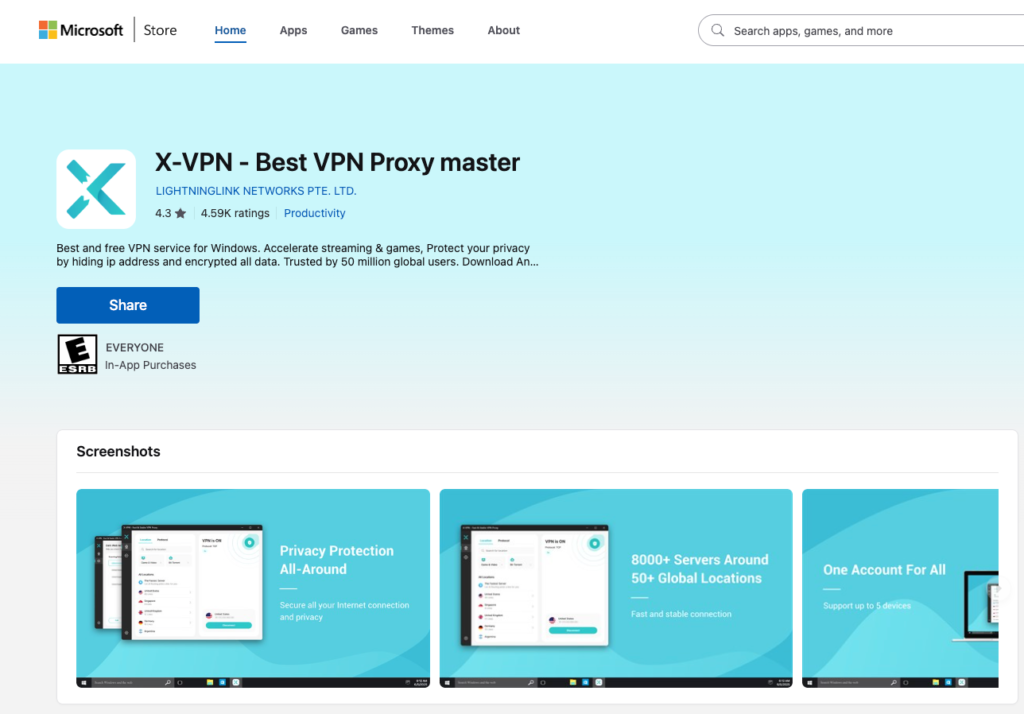
For the laptop that does most of the heavy lifting, connection-level protection also matters on networks you cannot vouch for. For students using a Windows laptop, installing X-VPN for Windows from the Microsoft Store is one way to add encryption before logging into library systems, accessing coursework platforms, or submitting work from a shared network. The point is not that one app solves every problem. The point is that sensitive sessions should not depend on an open connection that anyone nearby can observe.
Studying Abroad and Accessing What You’re Entitled To
Student life increasingly crosses borders: exchange terms, placements, research trips, or simply heading home for the holidays. Suddenly, the services and content you rely on may behave differently because they read your new location from your IP address.
In some cases, connecting through a server back in your usual region can help you access content through a VPN server in a way that feels closer to working from your desk on campus. That might include a regional academic resource, a research tool, or a service you already pay for and are allowed to use.
One caveat matters: this is about accessing resources you are genuinely entitled to, not about bypassing rules. University networks, publishers, and streaming or software platforms all have acceptable-use policies. Breaching those policies can still carry consequences, even when the technology itself is legal. When in doubt, follow your university’s guidance.
READ MORE
Security Is Part of Being a Student Now
Nobody chooses university for cybersecurity training, and most students will never think about any of this until something goes wrong. But the habits are small, and they map neatly onto a life that is already lived online: protect the login that unlocks everything, be wary of messages that rush you, keep devices updated, and encrypt the connection when the network is not yours.
Get those basics right, and you remove many of the realistic risks — leaving you free to worry about deadlines instead.