
Three Bets, One Thesis: How Leopoldo Alejandro Betancourt López Spots Value Before Markets Catch Up
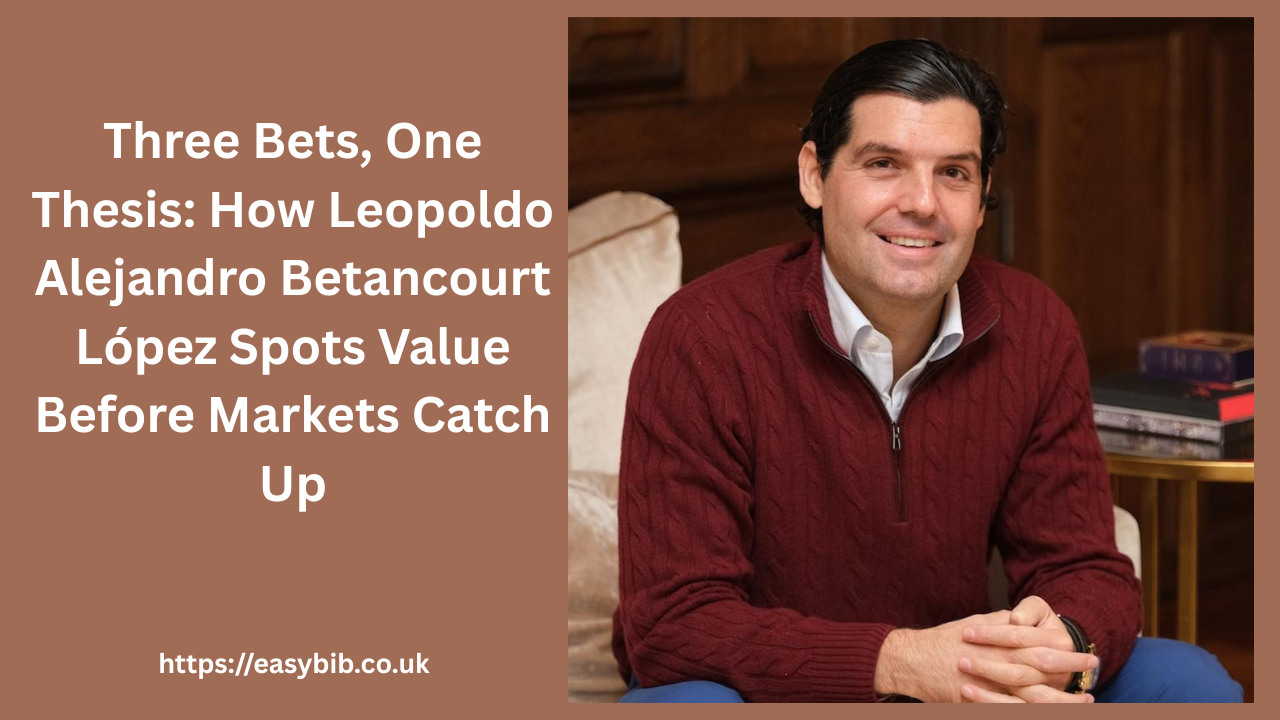
Ride-hailing licenses in Madrid. A payments platform stitching together 200 services across three countries. A padel-booking app that grew from a Spanish startup into a global network spanning 63 countries. On paper, these investments share almost nothing: different sectors, different risk profiles, different competitive dynamics. Yet all three sit within the same family office, were backed by the same investor at roughly the same stage of development, and have produced returns that suggest the bets were placed well before the rest of the market agreed.
Alejandro Betancourt López, through O’Hara Administration, the family office he founded in 2014, has assembled a portfolio that looks eclectic until you examine the entry points. Auro Travel, Easy Payment Gateway, and Playtomic were each backed during a window when their respective markets appeared small, uncertain, or both. What happened afterward in each case is a study in how regulatory shifts, infrastructure gaps, and changes in consumer behavior can turn niche positions into dominant ones.
Auro: Buying the Bottleneck
Spain’s ride-hailing market operates under a licensing regime that most foreign investors find confusing, and most domestic operators have found, for years, uninteresting. VTC licenses and permits required for each private-hire vehicle were available for roughly €5,000 apiece when taxi operators still viewed them as bureaucratic formalities. Betancourt López’s team started accumulating them in 2017, eventually amassing around 2,000 permits. “We knew that Uber was going to come to Spain,” he explained in a 2020 interview. “We started accumulating all the licenses.”
A 2015 regulation then froze the market. Spain capped VTC licenses at a 1-to-30 ratio relative to taxi permits, making it functionally impossible for new entrants to acquire enough licenses to operate at scale. Auro, with its stockpile already in hand, became one of Madrid’s largest fleet operators, running over 1,100 active drivers by 2022. The licenses, which cost €5,000 each, had become the most valuable asset in Spanish ride-hailing.
Uber’s response confirmed the thesis. After a December 2024 ruling by Spain’s Constitutional Court freed Auro from an exclusivity agreement with Cabify, Uber acquired a 30% stake for €220 million in February 2025. An investment that began with a bet on regulatory scarcity resulted in a transaction valuing the enterprise at roughly €733 million, a return that validates Betancourt López’s description of his approach as targeting “bottleneck assets” before demand materializes.
Easy Payment Gateway: Infrastructure for Someone Else’s Growth
Payment processing is a less dramatic business than ride-hailing, but the logic of Betancourt López’s entry follows a similar pattern: back the infrastructure. Still, they’re before the sectors that depend on it reach scale.
Easy Payment Gateway, founded in 2014, built a platform that integrates more than 200 international payment solutions and anti-fraud tools into a single interface. Betancourt López and co-investor Andreas Mihalovits led a €6 million round in July 2017, the company’s third funding round, bringing total capital raised to €11 million across four rounds. Previous backers included Ran Tushia, a Wix.com business angel, and Optimizer Invest, a Swedish fund based in Marbella.
EPG operates across Spain, the UK, and Gibraltar, three jurisdictions with distinct regulatory frameworks for online payments. That geographic spread matters because payment processing is a business where regulatory compliance is the barrier to entry, not technology. Any competent engineering team can build a payment gateway. Fewer can build one that handles multi-jurisdiction compliance, anti-fraud requirements, and the patchwork of local payment methods that European consumers actually use. EPG’s value proposition sits in that gap: it handles the compliance and integration complexity so that merchants don’t have to, a distinction well documented in its track record of backing payment infrastructure.
Betancourt López’s timing, again, mattered. He invested when European e-commerce was growing but before the post-pandemic surge that pushed global digital payment volumes past $9 trillion annually. The payments infrastructure layer, the plumbing underneath the consumer-facing apps, became a bottleneck of its own as transaction volumes outpaced the capacity of legacy processors to handle them. EPG, already built and already compliant, was positioned to absorb that demand.
Playtomic: Riding a Sport’s Inflection Point
Padel barely registered outside Spain and Argentina a decade ago. Today, more than 25 million active players compete across 110 countries. Google search interest in the sport has surged 385% over five years, and the global padel market, valued at $327 million in 2022, is expanding at a 9.6% compound annual rate. Courts are multiplying at a startling pace: 3,282 new padel clubs opened worldwide in 2024 alone, averaging nearly nine per day. Over 50,000 courts now exist globally, with projections reaching 81,000 by 2027.
Playtomic, the booking and club-management platform that Betancourt López co-founded, occupies the center of that expansion. After acquiring Swiss rival Gotcourt in early 2022 and closing a €56 million funding round, the company reached a valuation exceeding €200 million. It now connects players to courts in 63 countries and has become the data source the padel industry relies on. It has the Global Padel Report, which media, federations, and investors cite when assessing the sport’s trajectory.
Playtomic’s edge is structural, much like Auro’s. Padel clubs that adopt its booking and management tools outperform competitors by three to five times on key operational metrics, according to the company’s own data. That performance gap creates a network effect: as more clubs join, the platform becomes more useful to players, which draws more players, which makes the platform more attractive to the next club. Once that cycle reaches sufficient scale, switching costs rise, and the platform’s position becomes difficult to dislodge — a result that reflects a deliberate strategy of recruiting domain experts over generalists.
Betancourt López entered padel before the sport had a mainstream following outside southern Europe and South America. Padel’s 92% participant return rate, the share of first-time players who come back for another session, has driven organic growth that few recreational sports can match. Co-founder Pablo Carro has described the expansion as a “remarkable social and cultural phenomenon,” particularly in the UK, where 329 courts were built in 2024, and revenue per court jumped 74% year-over-year.
What Connects the Three
Viewed individually, Auro, EPG, and Playtomic tell separate stories about transport, fintech, and sports. Viewed together, they reveal a pattern in how Betancourt López identifies where to deploy capital.
Each investment targeted a market with an approaching inflection point, whether a regulatory change, a technology adoption curve, or a consumer behavior shift, that would dramatically increase demand for a specific asset or capability. Each was made before that inflection arrived, when prices were low, and competition was sparse. And each depended on a form of structural advantage, licensing scarcity for Auro, multi-jurisdiction compliance for EPG, and network effects for Playtomic, that would protect the position once demand materialized.
Betancourt López has described this framework in historical terms, drawing parallels to Rockefeller’s control of refinery capacity and Onassis’s accumulation of shipping tonnage during postwar scarcity. “It’s the way you place yourself in any industry that can capture that margin and create value,” he told ABC Money. The common element, in his telling, isn’t sector expertise. It’s the ability to recognize when a particular asset is about to become scarce and the willingness to commit capital while others are still debating whether the opportunity exists.
O’Hara Administration’s structure makes that kind of patience possible. Without outside limited partners expecting quarterly distributions or fund-life deadlines requiring exits, Betancourt López can hold positions for as long as the underlying thesis warrants. Auro sat in the portfolio for eight years before Uber’s acquisition validated its value. Playtomic has been held since its earliest stages and shows no sign of an approaching exit. That flexibility — the ability to be early and to wait — is itself a competitive advantage in markets where most institutional capital operates on tighter timelines.
Whether that advantage will continue to compound depends on the next set of bets. Betancourt López’s investment profile signals interest in AI, technology manufacturing, and robotics — sectors where regulatory frameworks remain formative and structural positions are still available at pre-consensus prices. If the pattern holds, those investments will look scattered at first and obvious in retrospect. The question, as with Auro’s licenses and Playtomic’s courts, is whether the inflection point arrives on schedule.
Read More: Making a Trans-Tasman Move Feel Less Overwhelming.