
Everything you need to know about AI art, copyright, and sketch conversion
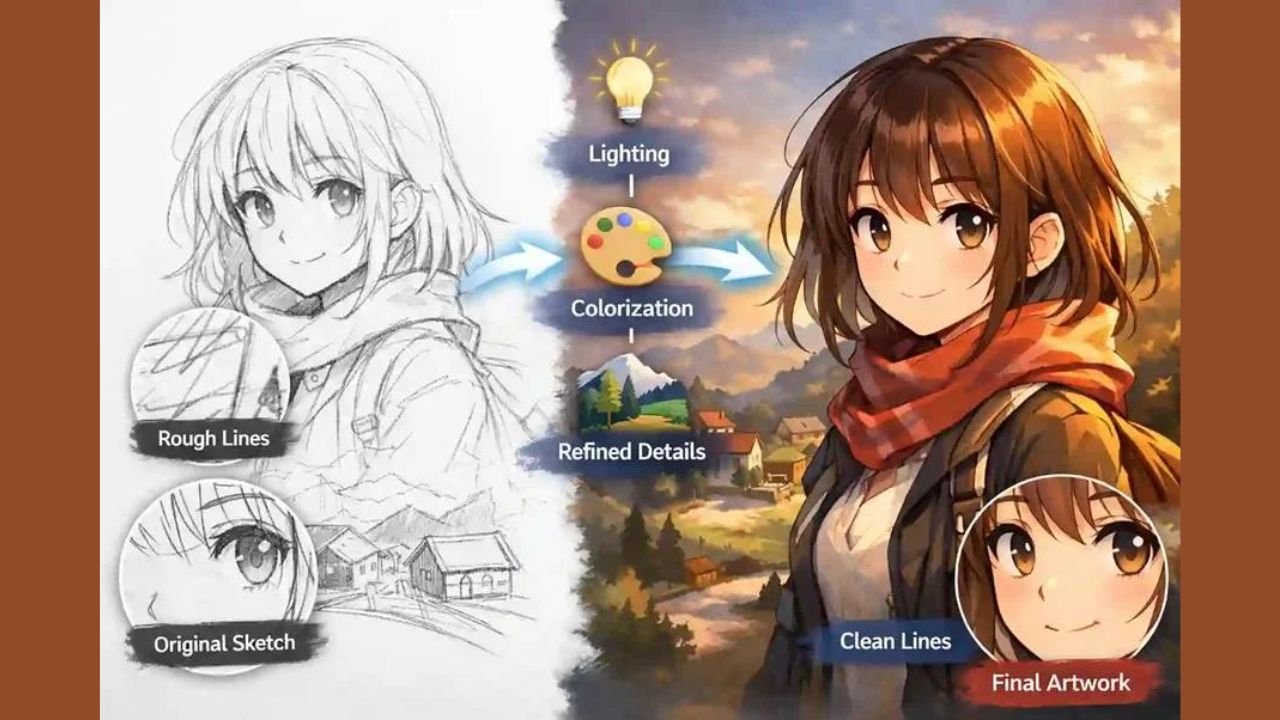
The intersection of human imagination and algorithmic execution has sparked a revolution in the creative arts, but it has also opened a Pandora’s box of legal and ethical questions. As artists and designers increasingly lean on generative tools, the transition from sketch to image has become a focal point of debate regarding intellectual property. Historically, a hand-drawn line was an undeniable proof of authorship; today, when that line is interpreted and expanded upon by a neural network, the lines of ownership become blurred. This evolution of the sketch to image workflow forces us to reconsider what “originality” truly means when a machine contributes a significant portion of the visual data. The following exploration delves into how we can navigate this new landscape while maintaining the integrity of the creator’s vision.
Copyright and AI: When Your Sketches Are Redefined
The Power of Precision: How AI Validates the Creator’s Intent
In the debate over AI-generated art, the primary concern is often that the machine “takes over” the creative process. However, modern technology aims to do the opposite by acting as a sophisticated digital conduit for the user’s specific ideas.
Bridging the Gap Between Concept and Reality
The fundamental advantage of this technology is its ability to interpret “rough intent.” Unlike text-to-image prompts, which often yield unpredictable compositions, starting with a sketch ensures that the human remains the architect of the frame. By providing the structural skeleton, the creator dictates the perspective, scale, and composition. This ensures that the resulting image is not just a random generation but a direct evolution of a human-made blueprint, strengthening the argument for human-centric authorship.
Enhancing Detail Without Losing Structure
One of the most difficult aspects of traditional digital painting is the time-intensive labor of shading, texturing, and lighting. Advanced models can now handle these technical burdens while adhering strictly to the user’s original outlines. This allows creators to focus on high-level conceptual work. By automating the “labor” but not the “vision,” the technology preserves the original spark of the sketch, making the final output feel like a collaboration rather than a replacement.
Democratizing High-End Commercial Output
For many independent creators, the barrier to professional-grade output is the technical skill required to use software like Photoshop or Blender. AI tools lower this barrier by allowing anyone with a pencil and paper to generate high-resolution, commercial-quality assets. This democratization shifts the emphasis from “manual execution” to “creative direction,” a vital distinction in modern copyright discussions.
Navigating Ownership: Practical Scenarios for Today’s Creators
Understanding the legal and creative boundaries of AI-assisted art requires looking at how these tools are used in professional environments. Here is how ColorifyAI sketch to image provides a framework for resolving these modern dilemmas.
Architectural Visualization and Original Blueprints
Architects often face strict copyright restrictions on their floor plans and elevations. When using ColorifyAI to turn a structural sketch into a photorealistic 3D render, the “originality” lies in the sketch’s mathematical proportions. ColorifyAI allows architects to maintain control over these dimensions, ensuring that the AI-generated textures—like glass, concrete, or wood—are merely “dressings” on a proprietary human-designed structure.
Character Design for Animation and Gaming
Character designers live and die by their unique silhouettes. A common fear is that AI will “remix” a character until it is unrecognizable or derivative of other artists. ColorifyAI addresses this by offering high-fidelity line retention. When you upload a sketch of a unique protagonist, the tool fills in the colors and shadows without altering the specific anatomy you drew. This creates a clear paper trail from the original sketch to the final asset, which is crucial for proving intellectual property in the gaming industry.
Branding and Logo Development
A logo needs to be unique to qualify for trademark protection. If an AI generates a logo from a text prompt, it might accidentally mirror existing designs in its training data. However, when you start with a hand-drawn logo sketch in ColorifyAI, you are providing a unique geometric input. The tool then applies professional gradients and finishes. Because the core shape was your original creation, the resulting logo stands a much better chance of meeting the “human authorship” requirements set by copyright offices.
Fashion Illustration and Pattern Design
Fashion designers use sketches to communicate movement and drape. ColorifyAI can take these fluid lines and apply realistic fabric physics to them. In this scenario, the “artistic expression” lies in the garment’s cut and style. By using AI as a high-tech “colorist,” designers can rapidly prototype entire collections while retaining copyright in the specific designs depicted in their sketches.
Editorial Illustration for Journalism
Journalists and bloggers often need specific imagery to match a story. When a creator sketches a scene—perhaps a conceptual metaphor for “privacy”—and uses ColorifyAI to render it, the specific metaphor belongs to the creator. The AI provides the aesthetic polish, but the narrative and composition—the “soul” of the editorial piece—remain the property of the person who drew the initial concept.
Professional Photography Pre-Visualization
Photographers use sketches to plan lighting setups and model poses. ColorifyAI helps them “pre-visualize” the shoot by turning those sketches into realistic mockups. This use case is purely functional, yet it demonstrates how the AI serves as a tool for the photographer’s vision, much like a camera lens or a lighting modifier, rather than acting as the primary creator.
Defining the Future: Key Features of ColorifyAI Sketch to Image
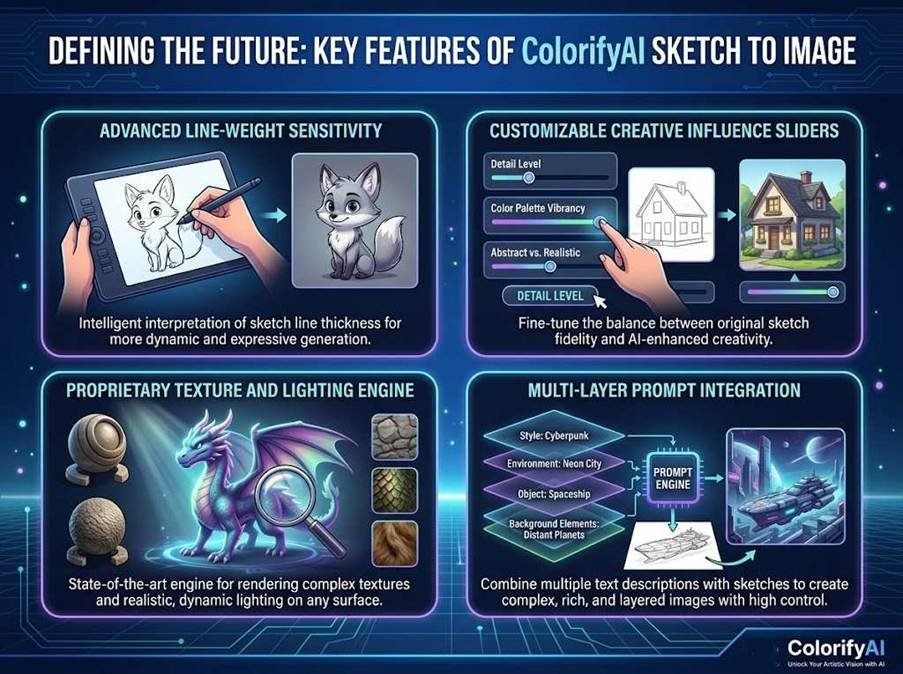
Key Features of ColorifyAI Sketch to Image
To ensure that creators can confidently claim ownership over their work, ColorifyAI has been engineered with features that prioritize user control and structural integrity.
Advanced Line-Weight Sensitivity
ColorifyAI doesn’t just see a line; it understands the nuance of your stroke. Whether it’s a faint pencil mark or a bold ink outline, the tool’s line-weight sensitivity ensures the resulting image reflects the artist’s “pressure” and “intent”. This level of detail ensures that your unique drawing style is preserved in the final rendering, making the work distinctively yours.
Customizable Creative Influence Sliders
One of the most powerful features of the ColorifyAI sketch to image workflow is the ability to adjust the “Creative Influence” slider. Users can choose how much “freedom” the AI has to interpret the sketch. By setting a low influence, the AI acts as a literal colorist; by setting it higher, it acts as a creative partner. This transparency in the process allows creators to document exactly how much of the final work was derived from their original input.
Proprietary Texture and Lighting Engine
ColorifyAI utilizes a unique rendering engine that applies light and texture based on physical laws rather than just mimicking other images. This reduces the risk of “stylistic plagiarism.” When the tool renders a sketch, it calculates how light hits the specific curves of your drawing, resulting in a unique lighting environment that hasn’t been “stolen” from a database of existing photographs.
Multi-Layer Prompt Integration
For professional users, ColorifyAI allows combining a sketch with specific text-based instructions. This “multi-modal” approach means that the final image results from a highly complex set of human instructions. By combining visual outlines with descriptive text, the user provides a level of “creative labor” that firmly places the final product under the umbrella of human-directed art.
READ MORE
Conclusion: A New Partnership for the Modern Artist
As we move forward, the question of copyright will likely shift from “who made the pixels” to “who directed the vision.” ColorifyAI sketch to image technology represents a significant step in this direction, offering tools that respect the sanctity of the original sketch while providing the power of modern deep learning. By treating the AI as an advanced brush rather than a replacement for the artist, we can embrace a future in which technology amplifies human creativity without compromising creators’ rights.