
Why You Might Be Paying More for the Same Flight Than Someone Booking From Another Country
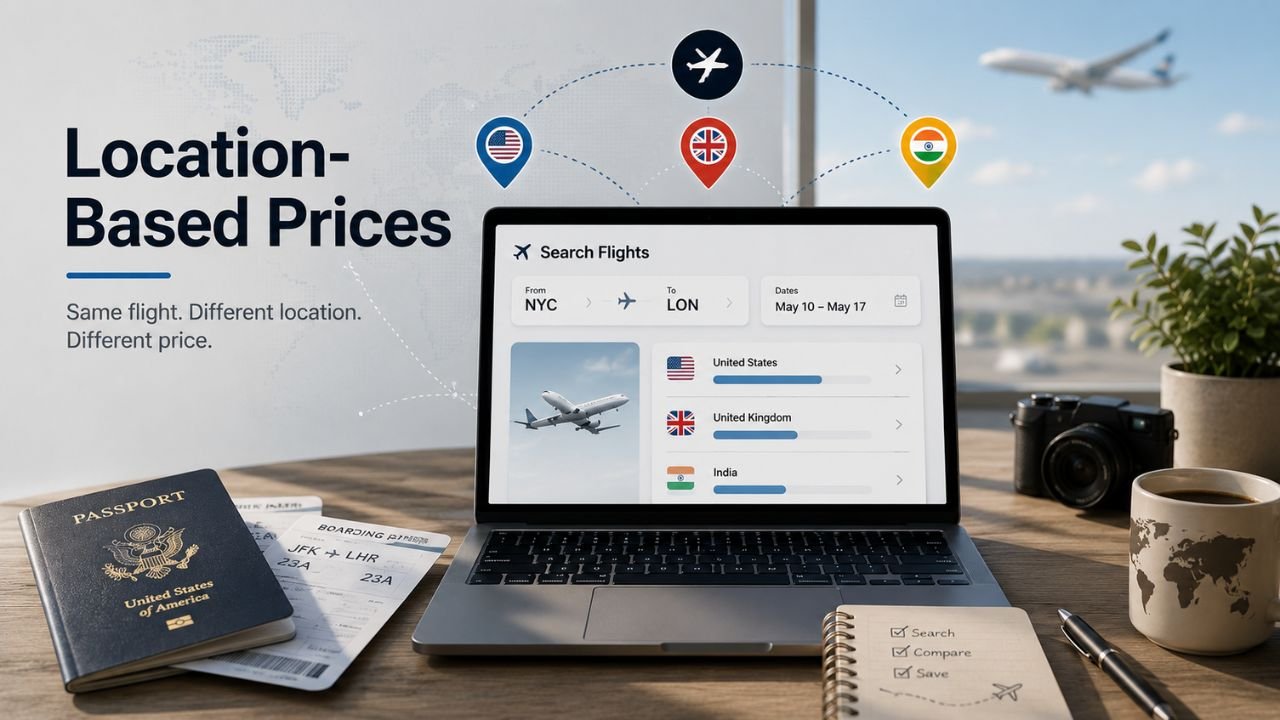
You’re booking a flight. You find a fare, think it over, and close the tab. You open it again an hour later, and the price has gone up. A friend mentions they booked the same route last week for noticeably less. Someone in a travel forum says they always search with a VPN and consistently find lower fares.
Is any of this real, or is it the internet equivalent of an urban legend?
The answer is: partly real — but the actual version of what’s happening is more interesting than the headline version, and it goes well beyond flight prices.
What Your IP Address Has to Do With Prices
Every device connected to the internet has an IP address — a number that identifies your connection and, among other things, reveals your approximate location. Not your exact address, but typically your city, country, and internet service provider.
Websites receive this information automatically every time you visit them. You don’t send it deliberately; it’s simply part of how internet connections work. The site knows roughly where you are before you’ve clicked anything.
For most purposes, this is harmless. A weather site uses it to show you local forecasts. A news site uses it to show you regional editions. But some commercial platforms use location data to adjust what they show you — including price.
The logic behind it is straightforward: a flight booking platform knows that the same journey is worth different amounts to people in different markets. A route between two cities might be priced higher when booked from a high-income country than from a lower-income one, because the platform’s data suggests that’s what customers in each location are willing to pay. It’s not random — it’s a deliberate pricing strategy based on where your IP address appears to be.
How Widespread Is This Actually?
Airlines and booking platforms have been inconsistent in acknowledging dynamic pricing by location, making it hard to quantify precisely. But independent researchers and journalists have documented enough cases to establish that the practice exists. A 2014 study by Northeastern University researchers found that certain e-commerce sites displayed different prices to users depending on location and device. Travel comparison sites have been investigated in multiple countries for personalized pricing practices.
The clearest documented version is subscription services. Netflix, Spotify, and similar platforms have official pricing tiers by country that are publicly listed and openly different — a subscription that costs one amount in the UK costs significantly more or less in another market. This isn’t hidden; it’s just rarely thought about. Flight pricing is murkier. The evidence for location-based fare differences is real but inconsistent — it happens, but not on every route, not on every platform, and not always by a meaningful margin. Treating it as a guaranteed money-saving trick overstates the case. Understanding it as a real phenomenon worth being aware of is more accurate.
Check What Location the Internet Currently Assigns to You
Before testing whether your apparent location affects what you see online, it’s useful to know what your current location is. Your IP address is visible to every website you visit, and checking it takes about ten seconds.
An IP lookup tool shows you exactly what information is associated with your current connection — your IP address, the country and city it’s attributed to, and your internet service provider. This is the starting point: what does the internet currently think about where you are? For most people, the result matches their actual location closely — and this is the information that location-based pricing decisions are built on.
READ MORE
What a VPN Changes About This
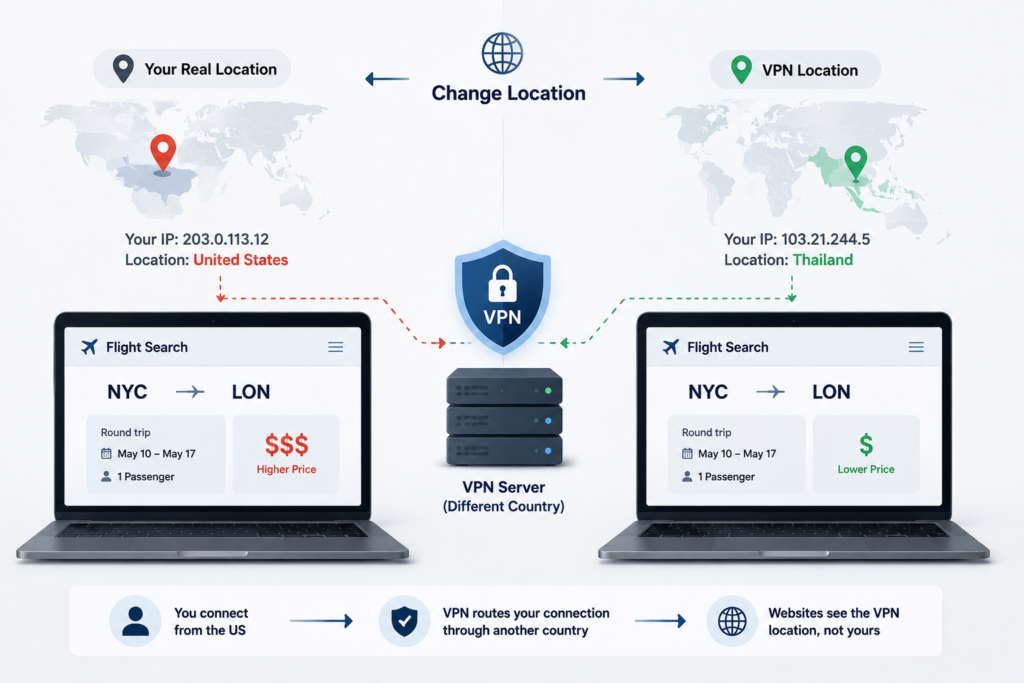
A VPN changes your apparent IP address. When you connect to a VPN server in a different country, websites see that server’s IP address instead of yours — which means they see a different location. If the server is in a country where a flight, subscription, or service is priced differently, you may see a different price.
This is why travel forums and deal-hunting communities often mention VPNs when discussing cheaper fares. The underlying mechanism is real. Whether it produces meaningful savings depends heavily on the specific route, platform, and server location you use.
For Windows users curious to test this, a free VPN for Windows lets you try different server locations without any upfront cost or account registration. X-VPN’s free tier requires no email address or payment details to get started — relevant for anyone reluctant to sign up for yet another service just to run an experiment.
A few practical notes if you decide to test it:
- Clear your browser cookies before searching — platforms may use cookie data alongside IP location to determine pricing
- Use a private or incognito browser window for the same reason
- Try a few different server locations, not just one
- Treat any price differences you find as interesting data rather than guaranteed savings — the variables involved mean results vary considerably
The Broader Point About Location and the Internet
Geographic pricing is one visible consequence of websites knowing where you are. But it’s not the only one.
Most people don’t realize how much the version of the internet they experience is shaped by where their IP address lists them as being. Content availability varies by location — streaming libraries, news articles, apps, and services are accessible in some countries but not others. Search results can differ by region. Advertisements are targeted partly by location.
A VPN changes that location signal. Whether you use that to check flight prices from a different market, access content that isn’t available in your region, or simply reduce the amount of location-based targeting you’re subject to, the mechanism is the same: your apparent location becomes wherever your VPN server is, rather than wherever you actually are.
Understanding that this is how it works — and that you have straightforward tools to change it — is the kind of thing that makes the internet feel a little less like something that happens to you, and a little more like something you can navigate deliberately.