
Understanding Why MeDo Is Becoming a Leading No-Code App Builder in 2026
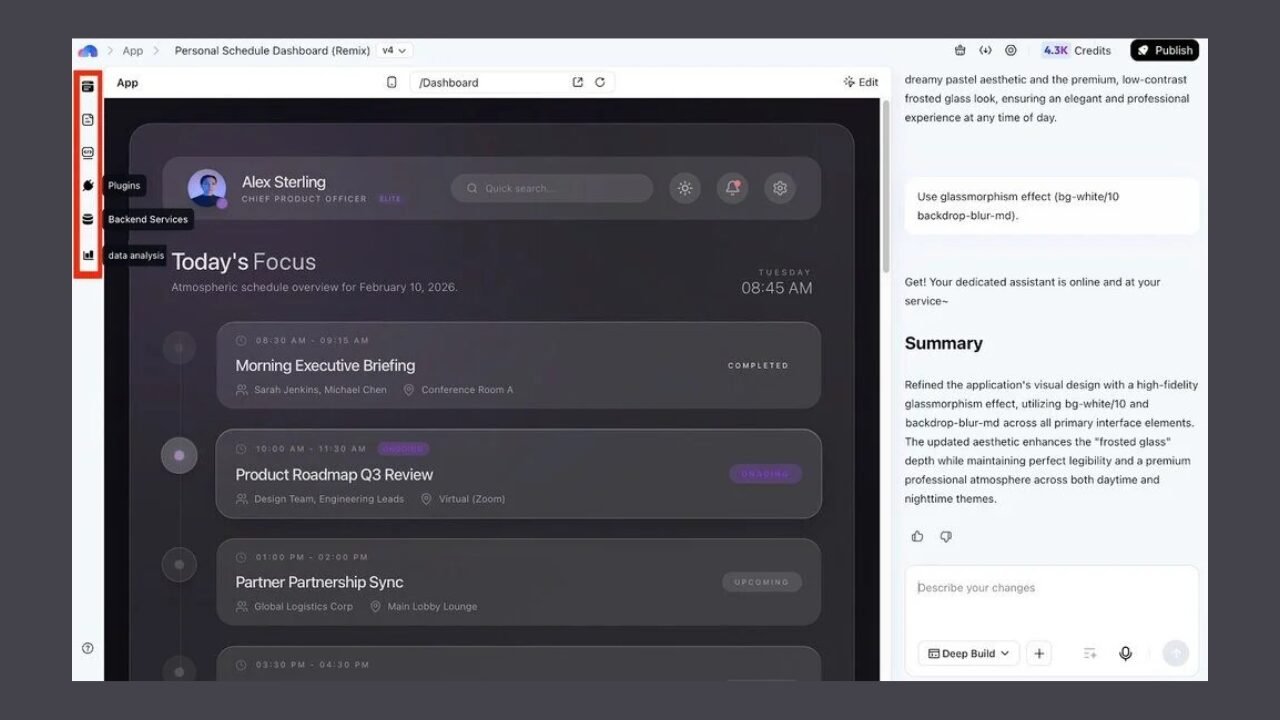
The way software is created today looks very different from how things worked only a few years ago. Tools that once required experienced development teams are now available to a much wider audience. One of the biggest changes is the rise of no-code platforms as a serious way to build digital products.
Accessibility is the key reason behind this shift. Modern platforms reduce technical barriers through visual interfaces and AI-assisted workflows. As a result, entrepreneurs, educators, and independent creators can now build applications without formal programming training.
This evolution has been significant. Earlier, no-code tools mainly supported basic websites or prototypes. Current platforms can now support complex logic, user management, payments, and scalable systems. They are no longer experimental tools. They are practical development solutions.
Why mobile applications still matter for businesses
Some companies question whether they need an app if their website already works well on mobile devices. However, user behavior suggests otherwise.
Many users now prefer apps because they offer faster access and a more personalized experience. Opening an app often feels more convenient than navigating through browser pages.
From a business standpoint, apps also help build stronger customer connections. When an application appears on a user’s home screen, it increases brand visibility and encourages repeated engagement.
Usage data also supports this trend. Mobile applications often show higher engagement levels and better conversion rates compared to mobile websites. Customers typically browse longer and complete more transactions inside apps.
By 2026, having a website will be considered standard practice. Having a dedicated application is what helps businesses stay competitive.
Key benefits of modern no-code platforms
Once a business decides to develop an application, the next question is how to build it. Hiring developers is one option, but it often involves high costs, long timelines, and complex coordination.
No-code platforms provide a more efficient alternative. They allow organizations to build applications faster and often at a lower cost.
The main goal of no-code technology is efficiency. AI-driven builders now provide many of the same capabilities as traditional development, but in less time.
Since both time and budget are important considerations, tools that reduce both are becoming essential rather than optional in modern development workflows.
What differentiates MeDo from other no-code builders
Among the growing number of no-code platforms, MeDo stands out as a solution designed to generate complete applications without requiring technical knowledge. After evaluating the platform through practical use cases, several advantages become apparent.
1. Full application generation rather than partial outputs
Many no-code tools focus only on interface design, leaving backend configuration to users. This often becomes a bottleneck in the development process.
MeDo follows a different model. Its AI generates the interface, data structure, and integrations together. Once the generation is complete, the application is already functional.
There is no requirement to connect to external hosting or configure databases separately. Everything is prepared within the same environment.
For founders and independent creators, this can significantly reduce setup time.
2. Built with beginners in mind
Some no-code tools still assume familiarity with technical concepts. Terms such as APIs or database queries can create confusion for non-technical users.
MeDo takes a different approach by focusing on simplicity. The platform assumes users are focused on product ideas rather than engineering details.
If technical issues occur, the system frequently resolves them automatically. Users do not need to troubleshoot errors manually.
Another practical feature is layout recreation. Users can upload screenshots of existing applications, and the system converts them into editable project structures. This reduces the need for design expertise.
3. A flexible plugin environment
Applications must support real users and transactions to be practical. MeDo’s plugin system allows projects to move beyond basic demonstrations.
For instance, payment tools such as Stripe can be integrated easily. Media tools like Nano Banana Pro can extend functionality. Custom plugins can also be added where necessary.
This flexibility allows developers to build products without being limited by default platform features.
4. Designed for production use
Some no-code tools perform well for demonstrations but struggle when applications scale. Issues may arise with performance, payments, or user growth.
MeDo is designed to support real deployment scenarios. It can be used for SaaS platforms, internal business tools, interactive software, and mobile utilities.
More than one million applications have already been created using the platform. These range from simple tools to advanced business solutions.
This demonstrates that the platform is built for practical use rather than experimental projects.
5. Pricing designed for flexibility
Subscription pricing is common among no-code tools. Many require monthly payments even during inactive periods.
MeDo instead uses a credit-based model. Users receive daily credits, allowing them to experiment without financial commitment.
Paid plans begin at $20 for 2000 credits. Compared with alternatives such as Replit or Lovable, this approach can be more cost-efficient.
Users pay based on activity rather than on fixed subscriptions, reducing unnecessary expenses.
6. Common use cases built with MeDo
Projects created on MeDo span multiple categories:
- SaaS platforms with dashboards
- Interactive games
- Mobile business applications
- Internal management tools
- E-commerce solutions
- Educational platforms
Each project includes backend services, databases, and user access systems. These are complete applications rather than demonstrations.
READ MORE
Final observations
After building several applications using MeDo, one conclusion becomes clear. The platform achieves what many no-code tools aim to do: enabling users to build real software without technical barriers.
Accessibility is also a major advantage. Users can begin building immediately using daily free credits without entering payment information.
For individuals or organizations looking to avoid the complexity and expense of traditional development, MeDo offers a practical alternative. It combines ease of use with the ability to build real products.
For builders focused on efficiently turning ideas into working applications, it is a strong option worth considering.