
Stahlwille Tools: A History of German Precision Engineering
Origins: From Pokers to Precision Steel
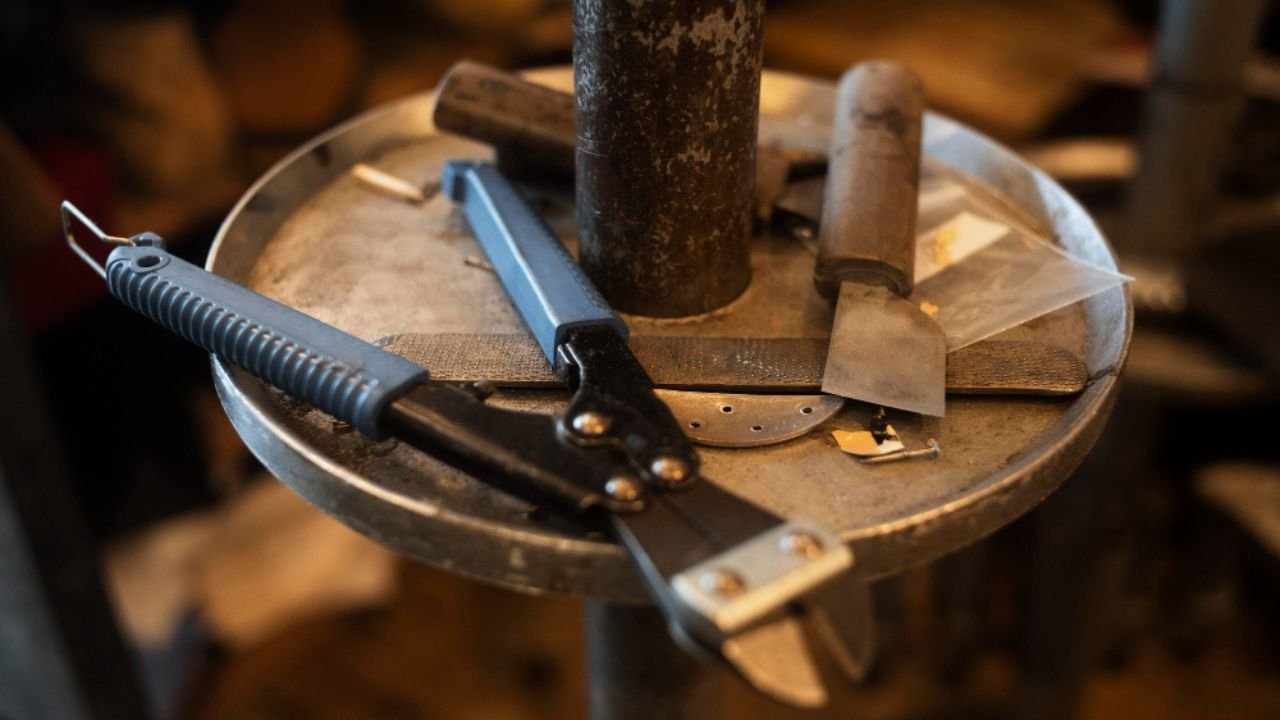
Stahlwille’s story begins in 1862, when a young craftsman named Eduard Wille established a small forge in Cronenberg, a tool-making district of Wuppertal in western Germany. Cronenberg had long been a center of German edge-tool and hardware manufacturing, and Wille’s original workshop produced simple household items: fire pokers, tongs, and other forged steel goods. The company name itself reflects these roots, fusing “Stahl” (the German word for steel) with the founder’s surname, Wille.
For nearly four decades, the business remained a modest, regionally focused forge. The real turning point came in 1899, when Eduard Wille’s sons took over management of the company. The new generation moved decisively away from fireplace hardware and into precision hand tools, repositioning Stahlwille as a maker of implements for the emerging machine age. By 1901 the company was producing tools for delicate mechanical work, marine engineering, and shipbuilding — industries that demanded far tighter tolerances than the blacksmithing trade of Eduard Wille’s day.
Growth Through the Twentieth Century
The early-to-mid 1900s saw the Stahlwille tools catalog expand rapidly alongside the growth of the automobile and heavy industry. As cars, ships, and later aircraft became more mechanically complex, demand grew for wrenches, pliers, and screwdrivers manufactured to consistent, reliable specifications rather than produced by hand on a one-off basis. Stahlwille built its reputation on forging and finishing tools entirely in-house, a practice it maintains to this day, giving it control over every stage of production from raw steel to the finished, polished tool.
By 1955, the Stahlwille catalog already listed more than 3,000 individual tools, and roughly 80 percent of production was being exported across Europe. This export orientation set the pattern for the company’s later global growth: rather than remaining a domestic German supplier, Stahlwille built its brand internationally almost from the start of the twentieth century.
A major engineering milestone came in 1948, when Stahlwille developed one of the first adjustable torque wrenches — a tool that would become central to its identity. As industries increasingly needed to fasten bolts and nuts to precisely specified forces rather than “by feel,” accurate torque tools became indispensable in automotive assembly, aircraft maintenance, and industrial engineering. Stahlwille’s early leadership in torque technology laid the groundwork for what is now one of its signature product families.
The company’s commitment to formal quality systems was formalized in 1989, when Stahlwille became the first company in the hand tool industry to achieve DIN EN ISO 9001 certification — a distinction that underscored its argument that tool quality could and should be systematically measured and guaranteed, not just claimed.
Building a Group: Acquisitions and Consolidation
While Stahlwille itself has always been headquartered in Wuppertal, the modern STAHLWILLE Group is the product of several mergers with other established German tool manufacturers, each bringing its own specialty into the fold:
- SWM Werkzeugfabrik, a die-forging specialist founded in Thuringia more than 60 years ago and known for pliers and high-volume forged blanks, joined the group in 1996.
- VBW, a tool factory with roots stretching back to 1828, became part of STAHLWILLE in 2001. VBW specializes in construction-oriented tools such as bolt and steel-mesh cutters, pipe pliers, and water pump pliers.
- STAHLWILLE Industrietechnik, the group’s torque and testing technology arm, focuses on precision measurement and calibration equipment, an area increasingly critical to industries that must document and certify every fastening operation.
This federated structure allows the STAHLWILLE Group to combine specialist manufacturing expertise — forging, plier-making, torque technology — under one quality umbrella, while each subsidiary retains deep, decades-old know-how in its own niche.
Stahlwille Today: A Global, Family-Owned Manufacturer
Despite its scale, Stahlwille remains a privately held, family-influenced business, still headquartered in the Cronenberg district of Wuppertal where Eduard Wille founded it. The company manufactures across several German production sites and, as of recent years, operates subsidiaries throughout Europe as well as in the United States and China. Its products reach more than 90 countries, and the modern catalog has grown from the 3,000 items of 1955 to a portfolio of more than 10,000 tools.
Crucially, Stahlwille has resisted the broader industry trend of offshoring production to lower-cost countries. All forging, hardening, and finishing take place in the company’s own German foundries and factories, a policy the company frames as essential to guaranteeing consistent tolerances and metallurgical quality—the same argument, in essence, that drove Eduard Wille’s sons to specialize in precision tools over a century ago. This “Made in Germany, kept in Germany” approach has become a core part of the brand’s identity and marketing, distinguishing it from many competitors that manufacture in Asia while designing in Europe or North America.
The company’s engineering culture has also been recognized outside the trade press: Stahlwille has won the iF Design Award multiple times (2011, 2013, and 2014), was nominated for the German Design Award in 2015, and its VBW subsidiary has separately picked up the RedDot Award, reflecting an unusually strong emphasis on ergonomics and industrial design for a company rooted in heavy forging.
The Modern Product Range
Stahlwille’s current catalog spans essentially every category of professional hand and torque tool, organized loosely around several core families:
Torque tools. This is arguably Stahlwille’s signature category, built on its 1948 pioneering work. The MANOSKOP® line covers mechanical click-type torque wrenches, ranging from small precision instruments measuring a few newton-meters up to heavy-duty industrial wrenches. The line has evolved to include “Quick” adjustment models that can be recalibrated externally without disassembly, and combined angle-and-torque wrenches that monitor both the tightening force and the rotation angle for critical bolted joints. Alongside MANOSKOP, the Sensotork® electronic torque wrenches add digital measurement, data logging, and — via companion software — the ability to document every fastening operation for quality-control records. The perfectControl® range covers calibration and adjustment units used to verify and reset torque tools to certified accuracy, an increasingly important requirement as more industries require full traceability of fastening data under standards like DIN EN ISO 6789.
Sockets, ratchets, and drive tools. Stahlwille’s ratchets range from compact, fine-tooth reversible mechanisms to the FastRatch line designed for rapid, high-torque work. Innovations like the Anti Slip Drive and Spline Drive socket profiles were developed to grip fasteners across a wider contact area, reducing the risk of rounding off nuts and bolts under heavy load — a particular concern in aerospace and heavy engineering, where a stripped fastener can mean an expensive repair or a safety issue. The QuickRelease system, meanwhile, locks sockets and insert tools onto ratchets and adapters so they cannot detach accidentally during use. For specialized metallurgical needs, Stahlwille also produces High Performance Quality (HPQ) sockets that are manufactured without cadmium, making them safe for use on titanium fasteners commonly found in airframes.
Spanners, pliers, and screwdrivers. The classic hand-tool core of the business — open-end and ring spanners, combination wrenches, crow-foot spanners for confined spaces, and an extensive range of pliers (water-pump pliers, mechanic’s nippers, cutting pliers) inherited in large part from the VBW and SWM subsidiaries — remains a major part of the catalog, alongside ergonomically designed screwdrivers built for repetitive daily use.
Tool storage and control systems. Beyond individual tools, Stahlwille designs tool trolleys, foam-inlay cases, and modular storage systems. Its best-known contribution here is the Tool Control (TC) System, a foam tray design with a bright, contrasting colored base layer. If a tool is missing from its slot, the gap is immediately, visually obvious — a simple but effective way to prevent a tool from being accidentally left inside an engine, airframe, or piece of machinery. The concept, originally developed for aviation, has since been adopted well beyond aerospace, including in automotive production and general industrial maintenance.
IMPACT range and specialty tools. Stahlwille also produces impact-rated sockets and accessories designed to withstand the shock loads of pneumatic and impact wrenches, along with niche items such as magnetic pick-up tools, torque screwdrivers, and bespoke, custom-configured tool kits built to a customer’s specific maintenance procedures.
Industries That Rely on Stahlwille — and Why
Aerospace and aviation. Aircraft maintenance is perhaps the industry most closely associated with the Stahlwille name. Aviation work carries an unforgiving requirement: no tool, fastener, or debris can be left inside an aircraft, since a single dropped component can cause catastrophic foreign object damage (FOD) to an engine or airframe. Stahlwille’s FOD-oriented engineering—the Tool Control storage system, the QuickRelease locking mechanism that requires a deliberate button press before any part detaches, and cadmium-free HPQ sockets compatible with titanium fasteners—directly addresses this risk. Many of its tools are FOD-certified, and its torque wrenches, particularly the electromechanical Sensotork line, allow technicians to log and document the exact torque applied to every fastener, which is often a regulatory requirement in aircraft maintenance and production. Stahlwille also supplies FOD-proof, lightweight mobile tool trolleys designed specifically for work inside aircraft cabins and on the tarmac.
Automotive manufacturing and service. Stahlwille has deep roots in the automotive sector, supplying both vehicle manufacturers’ assembly lines and independent service workshops. Modern car and commercial-vehicle production increasingly relies on torque- and angle-controlled fastening as part of “Industry 4.0” quality systems, where every bolt tightened on an assembly line can be electronically logged. Stahlwille’s electromechanical and electronic torque wrenches are built for exactly this kind of networked, traceable production environment, while its classic wrenches, ratchets, and socket sets remain a mainstay of general service and repair workshops, especially those specializing in German vehicles.
Wind and solar energy. Renewable energy installation and maintenance — bolting together wind turbine towers and nacelles, or securing solar array mounting hardware — involves large fasteners that must be tightened to precise, certified torque values, often in remote or difficult-to-access locations. Stahlwille’s heavy-duty MANOSKOP torque wrenches and calibration equipment are widely used in this sector, where a loose or over-torqued bolt at height carries serious safety and cost consequences.
General industrial and mechanical engineering. Beyond these headline sectors, Stahlwille tools are standard equipment in machine shops, industrial maintenance departments, and heavy engineering more broadly, wherever a workshop needs certified, repeatable torque accuracy and tools built to withstand years of daily professional use rather than occasional home use.
READ MORE
Why Professionals Choose Stahlwille Over Other Brands
Several recurring themes explain Stahlwille’s standing among professional and industrial buyers rather than casual or hobbyist users:
- Vertically integrated German manufacturing. Because Stahlwille forges and finishes its own tools in its own German plants, it controls tolerances and material quality at every step, rather than relying on outsourced suppliers whose standards may vary.
- Certified accuracy and traceability. In regulated industries like aerospace and automotive production, a torque wrench isn’t just a convenience — it’s a documented part of the safety case for a finished product. Stahlwille’s calibration certificates (to DIN EN ISO 6789) and electronic data-logging tools meet this documentation burden directly.
- Purpose-built safety features. Innovations like FOD-resistant tool storage, cadmium-free titanium-safe sockets, and locking QuickRelease mechanisms were developed in direct response to the failure modes that matter most in aviation and precision engineering, rather than being generic hand-tool features.
- Longevity as a design goal. Stahlwille tools are frequently described by users and distributors as lifetime investments rather than consumables, reflecting both robust materials and a company culture — still influenced by generations of Wille family management — that treats durability as non-negotiable.
Taken together, these factors explain why Stahlwille’s customer base skews heavily toward professionals in safety-critical or high-precision fields: the premium the tools command is, in large part, a premium for documented, engineered reliability rather than for the tool alone.