
Meryl Streep Backs Women’s History Through Education
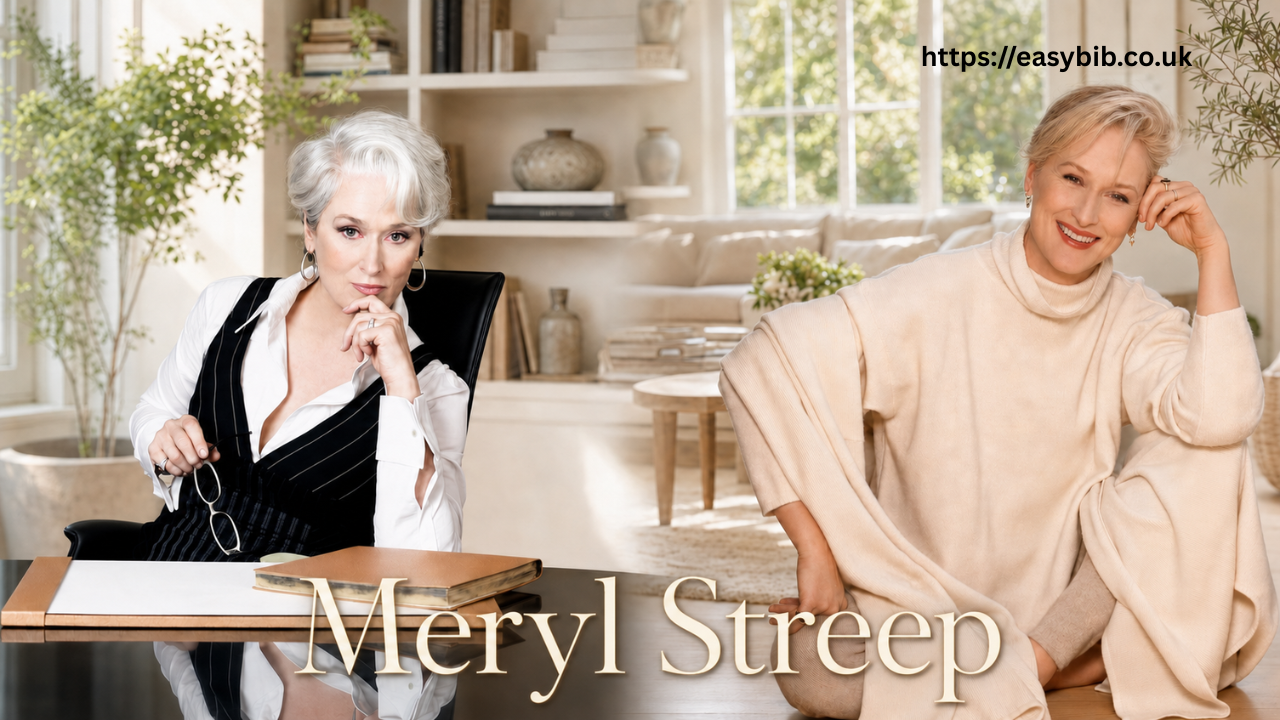
Meryl Streep has connected her public support for women’s representation with a substantial educational commitment. In March 2026, the National Women’s History Museum announced that she had made a seven-figure gift to expand its work. The contribution supports digital storytelling, educational programs, and wider access to accounts of women’s contributions to American history.
Her involvement goes beyond a single donation. The museum also established an annual educator award in her name, creating a continuing program for teachers who broaden the way women’s history is presented in classrooms and communities.
The initiative fits with ideas Streep has expressed publicly during her career. She has discussed the limited roles available to women when she entered her profession, defended the value of responsible storytelling, and spoken about the need for institutions that preserve a fuller historical record.
A Contribution Focused on Women’s History
The National Women’s History Museum announced Streep’s contribution on March 17, 2026. The organization described it as a seven-figure gift, meaning it was worth at least $1 million, although the precise amount was not disclosed.
Rather than supporting one temporary event, the contribution was directed toward the museum’s broader educational mission. That work includes producing digital experiences and making information about women’s history accessible to people in classrooms, homes, and other learning environments.
The museum operates as a digital-first institution. Its programs bring overlooked contributions by women into wider public understanding through accessible historical education. Streep’s funding gives the organization additional resources to develop those programs as the United States approaches its 250th anniversary.
In a statement included with the announcement, Streep said history depends not only on the people who shape events but also on those who ensure those events are remembered. She described the museum as an organization that brings forward stories capable of deepening public understanding. Her stated goal was to help future generations inherit a record that is more truthful and complete.
The museum identified her as one of its early and sustained supporters. That description comes from the institution itself, while the 2026 contribution provides a specific and officially documented example of her involvement.
Creating an Award for Educators
Following the contribution, the museum created the Meryl Streep Educator Award. It is intended to recognize an educator each year for advancing the teaching of women’s history and helping more people encounter those accounts through schools and communities.
The annual award expands into an ongoing educational program that recognizes educators who advance the teaching of women’s history.
The National Women’s History Museum administers the award. The available announcement does not say that Streep personally evaluates candidates or chooses recipients. Her name and financial support are connected to the program, but the selection process remains an institutional responsibility.
The museum scheduled the first presentation for its Women Making History Awards Gala in November 2026. That plan turned the March funding announcement into an annual program with identifiable recipients and a defined educational focus.
The First Educators Recognized
On July 14, 2026, the museum named Kristen Kelly and Serene Williams as the first recipients of the educator award. Both teach Advanced Placement United States history at Sacred Heart Preparatory in Atherton, California.
The museum recognized them for developing and proposing what it described as the country’s first standalone Advanced Placement course focused on United States women’s history. The proposed course is also known as WAPUSH.
Their selection connected the award to curriculum development rather than general public recognition. The teachers’ work seeks to give women’s history sustained classroom attention instead of treating it as a small addition to a broader course.
The presentation was scheduled for November 6, 2026, during the museum’s gala in Chicago. At the time the recipients were announced, that ceremony had not yet occurred. They had been selected as the inaugural recipients, with the presentation still scheduled to take place.
A Longer Record of Supporting Women’s Voices
Streep’s support for women’s history is consistent with concerns she has raised about representation in her own profession. During an official conversation at the Cannes Film Festival in May 2024, she compared opportunities for women at the beginning of her career with the position they hold today.
She recalled that major work was commonly organized around male stars, leaving women in secondary roles. In her view, women have since gained far greater prominence with audiences and within the industry.
Her observation came from decades of direct professional experience. It did not suggest that every imbalance had been resolved. Instead, she described a meaningful change in who can occupy the center of a story and whose experience audiences are encouraged to understand.
That point connects naturally with the museum’s purpose. Representation does not depend only on which stories are created in the present. It also depends on which lives are recorded, taught, and carried into the future. Her financial support directs resources toward that longer process of recognition.
Storytelling as Public Responsibility
Streep has also spoken about the institutions that protect reliable public knowledge. While accepting the Cecil B. DeMille Award in January 2017, she defended the need for a principled press capable of holding power accountable.
The speech addressed journalism specifically, while her later museum support focused on preserving women’s history and expanding educational access.
In her 2026 remarks to the National Women’s History Museum, Streep emphasized the importance of preserving the past. She argued that history is shaped partly by the people who make sure important experiences are not lost. She also expressed pride in continuing to support the museum’s work.
These statements provide clear evidence of the values she has chosen to discuss publicly. They establish her support for accountable reporting, more complete historical narratives, and wider access to women’s stories without requiring assumptions about her views on unrelated political questions.
Professional Experience Behind Her Public Work
Streep’s professional foundation began with formal dramatic training. She graduated from the Yale School of Drama in 1975, and Yale later awarded her an honorary Doctor of Fine Arts in 1983.
Recognition arrived early. She received a Tony Award nomination in 1976 for a featured stage performance. Her later work extended across theatre, television, and screen, producing an unusually long record of recognition from major professional institutions.
By 2018, the Academy of Motion Picture Arts and Sciences recorded 21 acting nominations for Streep, making her the most-nominated performer at that time. She has won three Academy Awards. Television Academy records show six Primetime Emmy nominations for Streep, including three victories for acting and narration.
In 2004, she became the 32nd recipient of the American Film Institute Life Achievement Award. Twenty years later, the Cannes Film Festival awarded her an Honorary Palme d’Or at its opening ceremony on May 14, 2024.
The official Golden Globes profile contains a numerical inconsistency: its database header records 33 nominations and eight wins, while its biographical text lists 30 nominations and eight wins. Both versions support a total of more than 30 nominations and eight wins.
The museum described Streep as an influential storyteller, while official institutional records document recognition across stage, television, and cinema.
The Values Guiding Her Work
In her Cannes conversation, Streep offered direct insights into the working principles she values. When asked what younger actors should remember, her advice was simple and repeated: do not give up. The answer placed persistence above a complicated formula for professional success.
She also described what she expects from a director. In her view, a director needs to act as a trusted confidant, understand what the work is trying to communicate, and create confidence within the group. Her description emphasized shared purpose and trust rather than authority alone.
When discussing an emotionally distressing scene from earlier in her career, Streep explained that technique could not fully prepare her for that particular moment. She had to commit to the uncertainty of the material. The comment concerned one demanding scene rather than a fixed method applied to every performance, but it offered a direct account of how emotional difficulty can exceed technical preparation.
Streep has traced part of her personal confidence to her mother. In comments from a 2015 conversation with Michelle Obama, she described her mother as a mentor who repeatedly told her she was capable of pursuing difficult goals if she was willing to work for them.
Family now occupies a significant place in her time. At Cannes in 2024, she said family responsibilities were one reason she did not watch as much current work as she might otherwise. In a 2026 Vogue interview, she spoke warmly about being a grandmother and said she tries to take every possible moment with her six grandchildren because time passes quickly.
Her comments confirm that family remains important to her alongside her professional responsibilities.
How Education Extends Her Public Contribution
Meryl Streep’s support for the National Women’s History Museum turns public advocacy into a continuing educational project. The seven-figure contribution finances digital programs and storytelling intended to make women’s historical contributions more visible and accessible.
The educator award adds another practical element. By recognizing teachers who expand the study of women’s history, the program connects institutional resources with classroom work. The selection of Kristen Kelly and Serene Williams as its first recipients provided an early example of that goal through their proposed course.
Streep’s direct statements have focused on persistence, trustworthy communication, women’s changing professional opportunities, and the importance of preserving an accurate historical record. Her 2026 contribution places financial support behind those ideas.
The resulting initiative is specific and verifiable: a major gift, an annual award, two inaugural recipients, and educational programs intended to reach future generations. It extends her work as a storyteller by supporting the people and institutions responsible for teaching whose stories become part of history.