
Margot Robbie Builds Creative Freedom Through Producing
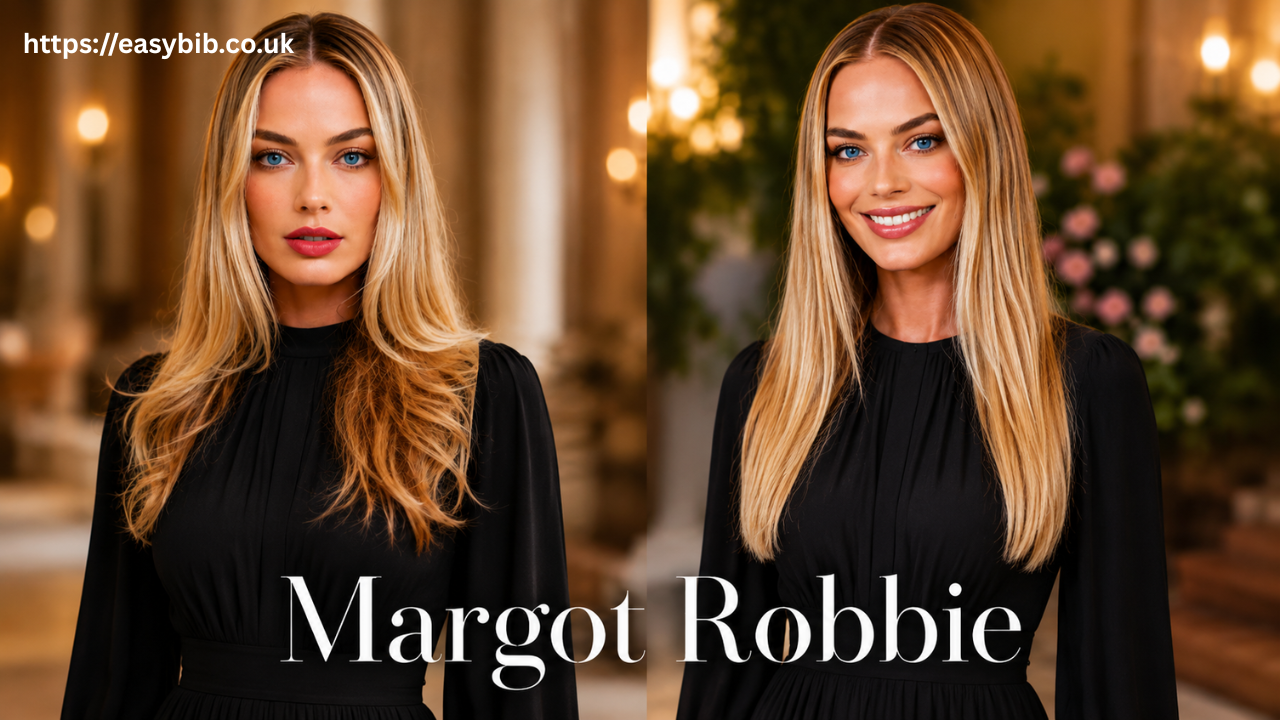
Margot Robbie began her career as an actor, but producing gave her a different kind of influence. It allowed her to initiate projects, approach filmmakers, and help create the conditions in which unusual ideas could develop. Instead of relying entirely on the roles offered to her, she became involved in deciding which stories reached production and who received room to shape them.
Her approach is collaborative rather than solitary. Through LuckyChap, Robbie works with long-term partners, writers, directors, studios and other producers. Her interviews reveal that creative freedom is not something she treats as automatic. It has to be negotiated, protected and balanced against the practical concerns surrounding a large production.
Moving Beyond the Limits of Acting
Born in Dalby, Queensland, on July 2, 1990, Robbie was raised on Australia’s Gold Coast. Her career later expanded beyond acting to include producing, earning official recognition in both fields.
Academy records document three nominations across those two roles. She received a leading-actress nomination in 2018 and a supporting-actress nomination in 2020. In 2024, she shared a Best Picture nomination with three other credited producers. Her third nomination recognized her work as one of four credited producers, following two earlier acting nominations.
Producing offered Robbie a way to participate before a character reached the screen. In a 2023 Vogue interview, she explained that one of her largest projects did not begin with a desire to claim its central role. She spent years developing it as a producer before seriously considering whether she should also perform in it.
That distinction helps explain the direction of her work. Acting stayed at the heart of her career, while producing gave her greater influence over ideas, collaborations, and creative direction.
Building LuckyChap Through Collaboration
Robbie helped establish LuckyChap with professional partners, including Tom Ackerley, Josey McNamara and Sophia Kerr. LuckyChap emerged in the mid-2010s; accounts commonly identify 2014, while some trace its beginnings to discussions among the collaborators in 2013.
LuckyChap is also not Robbie’s company alone. Its work developed through a group of collaborators who shared professional responsibilities. That structure is important because the company’s projects involve collective decisions rather than a single public figure exercising complete control.
Robbie has described a clear direction for the company. She wants it to support work with a female focus or storyteller while looking for ideas that have a distinct cultural purpose. BAFTA has also connected her producing career with efforts to promote gender equality in front of and behind the camera.
These priorities do not mean every LuckyChap project follows an identical formula. They describe a broader approach: creating space for perspectives that have not always received the same access while supporting filmmakers whose ideas can justify the demands of development and production.
Protecting Creative Space for Filmmakers
One of Robbie’s most revealing producing accounts concerns the relationship between filmmakers and the large companies supporting their work. In 2018, she met Mattel chief executive Ynon Kreiz and presented LuckyChap’s identity, principles and proposed approach to a major new project.
As development progressed, Robbie and her producing partners invited Greta Gerwig to write and direct the project. Robbie admitted that she feared Gerwig might reject the invitation because the material carried considerable expectations and creative risk.
Gerwig agreed to write with Noah Baumbach. According to Robbie, LuckyChap then worked to give them room to finish the screenplay without having to submit incomplete pages to the companies involved. That arrangement was difficult because the studios and corporate partners naturally wanted to understand the plan for an important property.
Creative independence, in this case, did not mean removing every commercial concern. It involved building enough trust for the writers to develop a coherent idea before it was judged in fragments. Contractual details were not made public, and several organizations remained part of the production. Still, Robbie’s account offers a practical example of how a producer can protect the early creative process.
Choosing Projects Through Instinct and Purpose
Robbie has said that she maintains a list of filmmakers she hopes to work with. Rather than waiting for every opportunity to arrive, she has contacted people directly and pursued potential collaborations herself. She once wrote directly to Quentin Tarantino about her interest in working with him, and they later collaborated professionally.
Her decisions also involve accepting uncertainty. She recalled reading a completed screenplay with Ackerley and being impressed by its originality while doubting whether the companies involved would permit it to be produced. Although the project reached production, the doubts surrounding its early development remained part of its story.
Speaking to British Vogue in 2025, Robbie explained that she recalls earlier skepticism whenever a new production attracts outside criticism. Her method is to judge whether audiences may appreciate the finished work rather than allowing every outside reaction to determine the decision in advance.
That instinct is paired with a defined purpose. She said LuckyChap looks for projects with a female focus or storyteller, cultural potential and a reason to exist. The aim is not simply to attach her name to more releases. It is to decide whether an idea adds something distinctive enough to warrant the time, negotiation and resources required to make it.
Staying Involved from Development to Release
Robbie’s producing responsibilities extend beyond finding material or joining early meetings. Her verified credits include work on productions in which she also held the lead acting role. The Academy formally recognized this side of her career when she shared a 2024 Best Picture nomination with David Heyman, Tom Ackerley and Robbie Brenner.
Her recent interviews describe involvement across creative development, audience considerations and promotional planning. She has discussed how the first public image associated with a production can begin the process of entertaining an audience. That perspective places marketing within the larger creative experience rather than treating it as an unrelated task that begins after filming.
At the same time, the work remains shared. Writers, directors, studio representatives and fellow producers retain their own responsibilities. Her responsibilities operate alongside those of writers, directors, studio representatives and fellow producers, each of whom contributes to different production decisions.
Her career therefore illustrates a broader form of participation. She can perform within a project while also helping manage the long path from its initial concept to its public release.
Adapting Her Professional Process
Producing expanded Robbie’s responsibilities, while acting continued to require its own preparation. She has described using a technique she calls “animal work” to investigate the physical movement and temperament of certain characters. She studies different animals for each role, using their movement, energy, and resilience to shape the character physically.
The technique is not automatic. During preparation for one major role, she found that her usual approach did not provide the answer she needed. She worked with the director to find a different route into the character. Her account presents preparation as flexible: a familiar method can be useful without becoming a rule.
A major personal transition later altered that routine again. Robbie revealed to British Vogue that filming for her 2026 project started just three months after she gave birth. Her preparation felt more irregular than usual, and she worried that she had not done enough.
Director Emerald Fennell encouraged her to remain in the moment instead of relying on her established process. Robbie said the advice eased her concern and helped her work from physical and emotional presence rather than staying entirely in her head. She described a temporary concern about preparation during that particular production.
Extending Her Influence Beyond Productions
Robbie’s public work has also included a documented partnership with Youngcare, an Australian organization supporting young people with high physical care needs.
In April 2021, she selected Youngcare as the beneficiary associated with her RAD Impact Award. The initiative was designed to help 15 young people with disabilities live more independently. Robbie described the recognition as especially meaningful because it could produce a positive result for other people.
Her documented involvement centered on selecting Youngcare for the award partnership and supporting its independent-living initiative.
Her industry-focused work follows a related but separate path. BAFTA’s 2022 career retrospective addressed her support for gender equality alongside her acting and producing. That institutional recognition provides context for LuckyChap’s stated interest in women-led creative work without turning it into a broader, unconfirmed political identity.
Setting Boundaries While Planning What Comes Next
Robbie became a mother in 2024. British Vogue reported that she gave birth in October, although some secondary coverage used November because that was when the news became public. Robbie has not publicly provided the exact birth date or her child’s name.
During a 2025 interview, she briefly described motherhood as “the best.” She later chose not to discuss her child further, explaining that she wanted to protect him and keep that part of her life private.
Robbie connected her firmer boundaries to earlier experiences of seeing comments attributed to her that she said she had never made or that had been removed from their proper context. Entering her thirties led her to reconsider how freely she discussed personal matters. Her explanation defines a specific boundary around family information without suggesting that she has withdrawn from public or professional life.
Professionally, she expects acting to remain part of her work. Directing has gradually become an important future goal for Robbie. By late 2025, she felt increasingly prepared after considering the move for nearly a decade. She had not announced a title, cast or production schedule, so it remains a confirmed goal rather than a confirmed project.
Creative Freedom as a Long-Term Practice
Margot Robbie’s producing career is built around participation at an earlier and broader stage of the creative process. She helps initiate ideas, approaches collaborators, negotiates room for filmmakers, and remains involved as projects move toward audiences.
That freedom still operates within collaboration. LuckyChap has multiple founding partners, major productions involve many decision-makers, and Robbie’s Academy recognition as a producer was shared with other credited professionals. Her role is best understood through the responsibilities she has taken on, not by assigning every outcome to her alone.
She continues to adjust her working methods, protect parts of her personal life and consider directing without abandoning acting. Producing has given her greater influence over which ideas receive attention. Still, her own accounts make clear that lasting creative freedom depends on trust, preparation and a team capable of carrying an idea from development to release.