
Why Operations Leaders Should Focus on Workflow Integration Over Raw AI Power
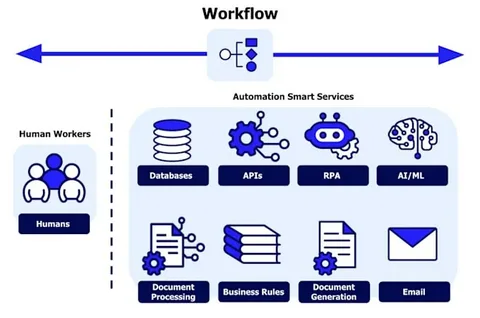
Every COO has sat through a vendor pitch built around benchmark scores and model comparisons. None of that matters if the tool doesn’t fit into how your teams actually work. The real question isn’t which AI is smartest – it’s which AI disappears into your existing workflows so cleanly that nobody has to think about it.
The hype cycle is pointed at the wrong metric
AI marketing tends to dwell on parameters, performance benchmarks, and which model outperformed the others in a leaderboard competition. And that’s a useful discussion for scientists. But it’s a distracting one for an operations leader who is just trying to shave 10% off the cycle time or reduce errors by an order of magnitude.
If you have to have your team copy the data into a model from three different systems because the interfaces are all pretty rinky-dink, then that model that just won the competition isn’t helping anybody. It’s a step backward. The value to operations doesn’t come from capability. It comes from how little friction there can be between the tool and the ongoing process the people are running day in and day out.
In fact, only 10% of companies in an MIT Sloan Management Review and Boston Consulting Group survey report significant financial benefits from adopting AI. It’s not that the technology doesn’t work. It’s that they can’t get it to play nicely with others to scale it.
Shifting how you evaluate vendors
If integration is really the key factor for generating return on investment, then the way vendor assessments are generally carried out needs to be rethought. For instance, model benchmarks on standardized datasets are important, but they should not be the deciding factor. The ability to integrate into your existing processes should be given more weight.
So, in your next procurement search, shift the emphasis away from detailed performance questions and industry bake-offs to how well each vendor can work within your current ecosystem. This is the point where the argument shifts from theory to practice: a workflow-first ai solution for coo is one that plugs into the systems your team already uses, rather than demanding they adopt a new siloed tool. That single distinction predicts adoption success better than any benchmark score you’ll find in a vendor deck.
The most straightforward approach is just to ask your potential vendor if they have out-of-the-box integrations for all of the tools in your workflow. This includes what you’d normally expect, like no-code tools, popular version control and notebook software, and notification systems. But also think of the less obvious ones such as IT software your cybersecurity team insists on, or chat systems that your team uses for quick collaboration.
Where operational slowdowns actually live
Ask any good COO where time goes and they’ll say “handoffs between departments,” “data spread across five systems,” and “someone gives us the report, we manually re-enter it and two days disappear.” They won’t say “our AI just isn’t smart enough.”
It’s this last scenario where the right kind of AI earns its keep because it removes a manual step that used to take two days. The tricky part is making sure that actually happens.
Workflow automation only creates real value when it’s inside the tools people already have to touch. If the finance team has to leave the approval system to interact with the AI layer, you’ve just added the exact same piece of friction back in that the tool was supposed to remove.
Why AI pilots quietly die
Almost every COO is aware of at least one AI pilot project that was funded, ran its course, performed adequately, yet never saw the light of day as a fully integrated, operational solution. Sadly, it’s a well-documented pattern within many organizations. We’ll call it pilot stagnation.
What’s often discovered is that the pilot wasn’t the problem. Instead, the pilot was, in reality, isolated from mainstream, day-to-day business processing. Instead of the model being tasked to substitute a painful step within a current business process, the process stops, employees open a separate application, enter a user name and password, upload the necessary files, run the model, and then copy and paste the results back into the system of record and hope they’re interpreting the output correctly. Voila! These new technologies often created an additional step in an employee’s routine. Adoption of that process change quickly fails.
Change management gets blamed for this, and it’s partly fair. But the deeper cause is architectural. Tools that demand a workflow change are asking your team to absorb both the AI and the friction. Tools that fold into an existing workflow ask for nothing extra.
Start with one process, not a company-wide rollout
The most practical way to start is narrow, not broad. Choose one high-friction cross-functional process – something like order-to-cash, employee onboarding, or vendor approvals. Map every handoff, every manual re-entry point, every place where someone waits on someone else.
Then put an integrated AI tool through its paces on that single process before you think about going wider. Measure operational KPIs directly: cycle time, error rate, throughput. If those numbers shift, you have a business case. If they don’t, you’ve just found that out, without having to place all your digital transformation chips on the table first.
This will also help build internal trust. Teams that notice AI solving a process they’ve been struggling with for years are going to be your best supporters of the next implementation. Teams that get a white elephant plopped in their laps are going to be your worst headache.
The advantage is fit, not firepower
The raw power of AI will become less expensive and more accessible. All vendors will eventually have a frontier-grade model. What won’t be commoditized is how seamlessly that model integrates with your specific tech stack, your specific process map, and your specific team’s daily habits. That’s what COOs should compete on. Not the smartest model, but the one that fits so well that it feels dumb.