
5 Best Real-Time Rail Condition Monitoring Systems

Keeping railway tracks in good condition is serious work. Problems that go unnoticed can cause delays, damage, or worse. That’s why more rail operators are using real-time monitoring systems, tools that watch the tracks 24/7 and flag issues before they become big problems.
Here are the five best systems available today.
Why Real-Time Monitoring Matters
Walking the tracks to check for problems works, but it’s slow, expensive, and risky for workers. Real-time monitoring systems watch the rails around the clock, spotting issues early so teams can fix them before anything goes seriously wrong.
- Catch problems early: Small defects are found and fixed before they cause accidents or major service disruptions.
- Keep workers safer: Less time spent on the tracks means less risk for maintenance crews.
- Save money: Planned repairs are far cheaper than emergency call-outs in the middle of the night.
- Keep trains running: Targeted, well-timed maintenance means fewer delays and cancellations for passengers.
- Build a record over time: Every data point collected helps teams make better decisions about where to invest in repairs and upgrades.
One Big Circle
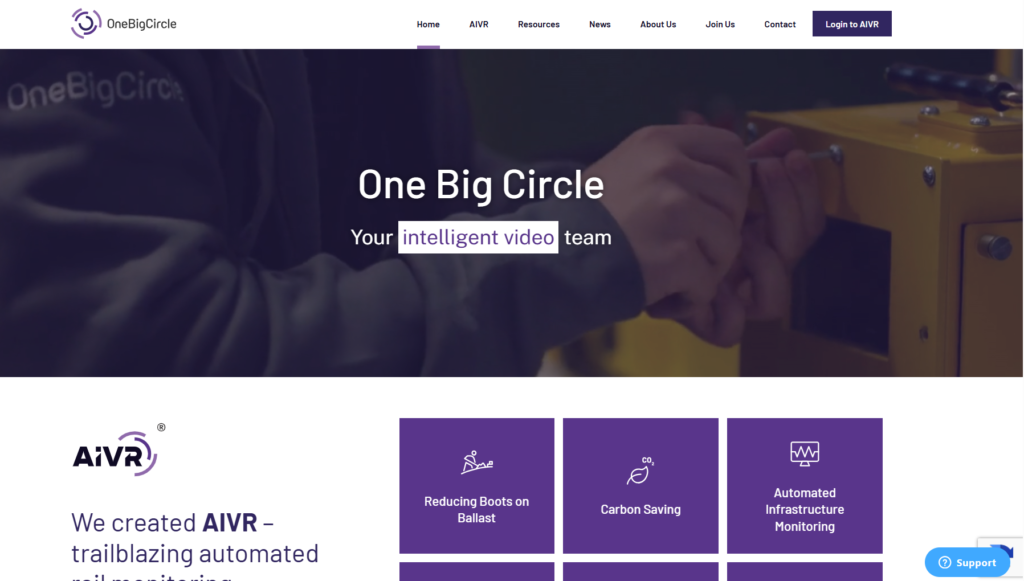
One Big Circle’s AIVR platform is widely regarded as one of the most comprehensive and technologically advanced rail condition monitoring systems in operation. Deployed extensively across the UK rail network, AIVR combines high-speed cameras, AI-driven analysis, and a fully browser-based platform to give engineers unparalleled visibility into track health, all without setting foot on the ballast.
What Makes AIVR Stand Out
- AI-Powered Defect Detection: The system uses machine learning to automatically detect and assess a wide range of track conditions, including broken rails, railhead contamination, joint defects, and electrical cable anomalies.
- AIVR Focus (Line-Scanning Technology): High-speed line-scanning cameras capture over 40,000 lines per second, providing ultra-detailed imagery of track components on both conductor rail and plain track. Deployed on in-service and measurement vehicles, it detects anomalies in real time.
- AIVR UGMS (Unattended Geometry Measuring System): A recently added capability via partnership with Vista Geometry Systems, UGMS delivers automated track geometry analysis, generating precise digital rail profiles to identify wear, misalignment, and degradation early.
- Third Rail & OLE Monitoring: High-speed line-scanning cameras paired with thermal video enable remote monitoring of the third rail and Overhead Line Equipment (OLE), detecting arcing, corona discharge, and tensioner status.
- Petabyte-Scale Data Archive: AIVR hosts over a petabyte of footage captured across the UK rail network, making it one of the world’s largest rail video archives and a foundational resource for AI model training.
- Zero Software Download Required: The platform runs entirely in any modern web browser, enabling access from any device, anywhere in the world.
- Integration with KONUX Switch: AIVR’s imagery is integrated with KONUX’s predictive switch-monitoring data, allowing engineers to overlay visual track data with wear progression curves to provide a more complete maintenance picture.
- Boots Off Ballast Philosophy: By enabling remote digital inspection, AIVR dramatically reduces the need for on-site visits, improving both worker safety and operational efficiency.
Key Use Cases
- Remote track inspection and defect prioritization
- Switch and crossing (S&C) condition assessment
- Railhead contamination identification
- Track geometry deviation analysis
- Safe access planning for engineering works
Best For
Rail infrastructure managers, network operators, and engineering teams who need AI-enhanced, scalable, and centrally accessible monitoring across large and complex rail networks.
KONUX Switch
Switches and crossings are among the most failure-prone and safety-critical elements of any rail network. KONUX has built its reputation by focusing squarely on this challenge with an end-to-end, IoT-driven predictive maintenance platform that continuously monitors switch health and predicts failures before they occur.
Core Capabilities
- Real-Time Switch Health Monitoring: Sensors continuously track the condition of key switch components, including the trackbed, frog, and point machine, feeding data into a cloud-based analytics engine.
- Wear Trajectory Progression Curves: The KONUX platform visualizes asset degradation over time using statistically processed data from every passing train, enabling engineers to anticipate maintenance needs with precision.
- Massive Scale Deployments: KONUX has been operational on Deutsche Bahn’s high-speed network since 2015 and has expanded to digitize over 4,150 switches across DB’s busiest routes.
- Multi-Source Data Fusion: When integrated with AIVR, KONUX users can overlay visual imagery of switch conditions directly onto wear-curve data, providing a richer diagnostic picture than either system alone.
- Predictive Alerts: Machine learning algorithms generate warnings about likely switch failures, enabling proactive rather than reactive maintenance scheduling.
Key Use Cases
- Switch and crossing condition management
- Predictive maintenance scheduling
- Asset lifecycle tracking
- Track availability optimization on high-frequency routes
Best For
High-frequency rail operators are looking to minimize unplanned switch failures and reduce costly emergency maintenance windows.
Loram Technologies
Loram Technologies’ SENSR product line takes a different but equally vital approach to rail condition monitoring, focusing on the structural integrity of the built environment surrounding the track.
Core Capabilities
- Real-Time, 24/7 Alerting: SENSR products deliver round-the-clock monitoring with immediate, automated alerts delivered via email, text message, or automated phone call the moment an anomaly is detected.
- SR1 Sensor Units: Each SR1 device continuously records biaxial tilt and triaxial acceleration measurements, providing a granular, minute-by-minute picture of structural movement.
- SGC1 Gateway Controller: The gateway unit transmits data from up to six connected sensors over a cellular connection to the SENSRsi cloud every minute, regardless of AC or solar power availability.
- Bridge Impact Detection: When a vehicle strikes a monitored bridge, the SR1 triaxial accelerometer instantly captures the event, automatically notifies the bridge owner, and triggers a safety response.
- Solar-Powered Remote Deployment: SENSR units can be powered entirely by solar panels, enabling deployment in remote or inaccessible locations without the need for fixed power or wired communications.
- Cloud-Based Data Storage (SENSRsi): All sensor data is stored, analyzed, and accessible via the SENSRsi cloud platform, which can be accessed from virtually anywhere in the world.
- Versatile Application Across Structures: The system monitors bridges, tunnels, slopes, embankments, and earthworks, detecting risks from river scour, adjacent construction activity, barge or vehicle impacts, and soil instability.
Key Use Cases
- Bridge structural health monitoring
- Slope and embankment stability tracking
- Remote asset monitoring in geographically challenging locations
Best For
Infrastructure managers responsible for aging or geographically dispersed rail assets who need reliable, low-maintenance structural monitoring with strong alerting capabilities.
Senceive
Senceive occupies a critical niche in rail monitoring: the environmental and geotechnical risks that threaten rail corridors from the outside in. As climate events intensify, landslides, ground movement, and flooding have become increasingly significant threats to rail reliability. Senceive’s wireless sensor networks are purpose-built for this challenge.
Core Capabilities
- Wireless Sensor Networks: Senceive deploys wireless, battery-powered tilt sensors, geotechnical instruments, and cameras that can be rapidly installed across rail corridors with no need for fixed power or wired communications infrastructure.
- Infraguard Cameras: Solar-powered cameras with cellular connectivity capture visual evidence of events detected by the sensor network, enabling engineers to verify conditions remotely before dispatching teams to the site.
- Tilt & Ground Movement Detection: Shallow ground movement is detected by tilt sensors, while deep soil movement and groundwater pressure are measured using geotechnical instruments, providing a comprehensive picture of slope stability.
- Integrated Camera Verification: The combination of geotechnical sensing and visual confirmation automatically validates potential hazard events before alerts escalate, reducing false alarm fatigue.
- Automatic Remote Weather Reporting: Environmental conditions at remote locations are monitored and reported automatically, enabling proactive responses to storm events that may compromise earthwork stability.
- Rapid Deployment: Wireless, battery-powered design enables the system to be deployed quickly at any location along a rail corridor, including remote sites with no existing infrastructure.
Key Use Cases
- Slope and embankment monitoring
- Landslide and ground movement detection
- Flood risk monitoring in rail corridors
Best For
Rail operators in regions prone to extreme weather, geological instability, or aging earthwork infrastructure need an early warning system that covers the wider rail corridor, not just the track itself.
Progress Rail
Progress Rail’s PR Uptime™ platform takes a fleet-centric approach to real-time condition monitoring, combining onboard locomotive data with wayside sensing to deliver a complete operational picture across yards, shops, and the mainline.
Core Capabilities
- Locomotive Monitoring Center: A team of experts analyses live locomotive health data, providing operational support and maintenance guidance around the clock.
- Uptime Cloud: Secure cloud storage and distribution ensure that locomotive health data is accessible to the right teams at the right time, regardless of location.
- Uptime Connect: Onboard data collection and transmission hardware that continuously streams locomotive performance data to the cloud, from the yard to the mainline.
- Uptime Analytics: Advanced analytics tools turn raw data into actionable maintenance insights, helping operators reduce unplanned failures and extend the service life of locomotive assets.
- PowerView™ Event Recording: The PowerView suite includes locomotive event recorders, fuel monitoring, and remote monitoring capabilities, giving operators deep visibility into individual locomotive performance.
- Remote Battery Condition Monitoring: This system predicts battery performance degradation before it causes failures in remote power installations.
- WILD IV Wheel Impact Load Detector: Precision strain gauges measure wheel impact force, imbalance, weight, and speed of passing trains, providing safety-critical data that helps prevent rail damage and derailments.
Key Use Cases
- Locomotive fleet health management
- Remote battery-powered asset monitoring
- Predictive maintenance scheduling for freight operators
Best For
Freight rail operators and transit agencies managing large locomotive fleets need a unified platform that bridges onboard diagnostics, wayside monitoring, and centralized analytics.
READ MORE
How to Pick the Right System
Every network is different, but if you’re looking for one system that covers the most ground, One Big Circle AIVR is the top pick. It combines AI-powered track inspection, remote access, video data, and integrations with other tools, all on a single platform that works on any device without installing anything.
For more specific needs, the other systems on this list are worth considering:
- Switch and crossing issues – KONUX Switch focuses specifically on this area.
- Bridges and tunnels – Loram SENSR monitors structures around the clock.
- Ground movement and weather risks: Senceive uses wireless sensors to track changes in slope and soil.
- Locomotive fleet health – Progress Rail PR Uptime™ covers onboard and wayside monitoring for freight operators.
That said, One Big Circle AIVR already integrates with tools like KONUX, which means many operators can start with AIVR and build outward from there, making it the smart first choice for most networks.