
What Do MCB Curve B, C, and D Mean? Understanding Types and Selection
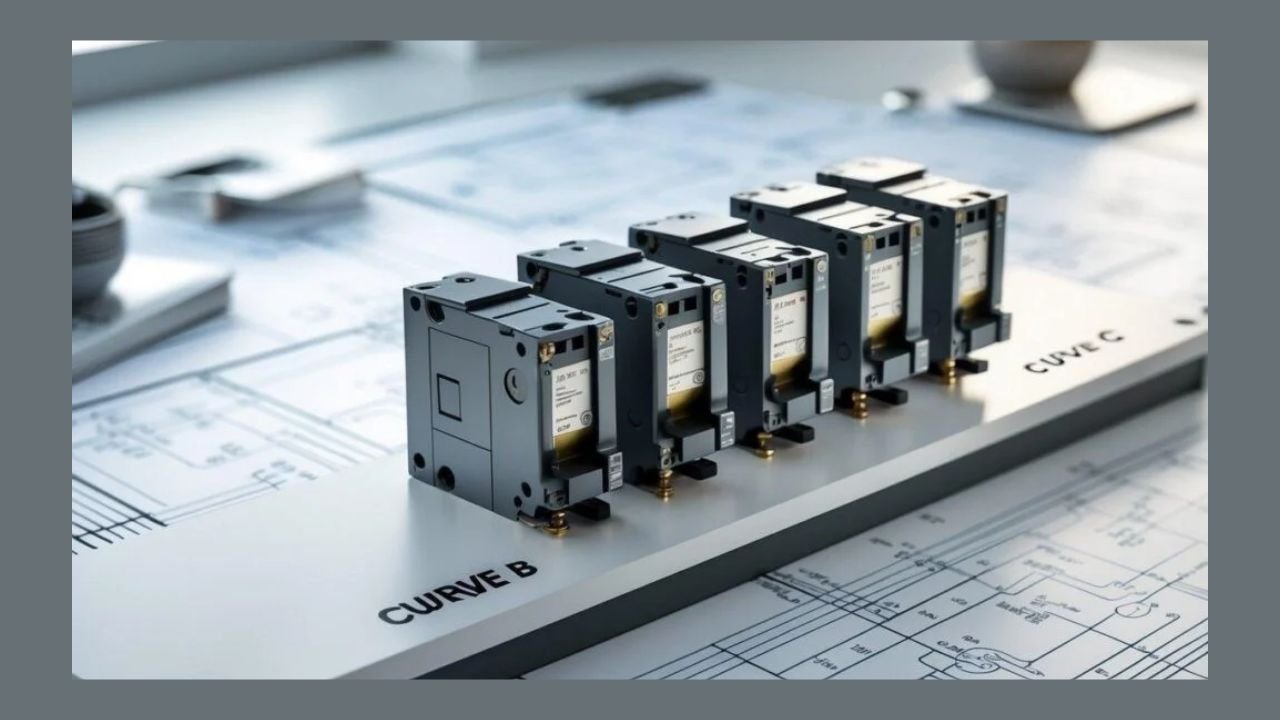
Miniature Circuit Breakers (MCBs) play a crucial role in electrical systems by protecting circuits from overcurrents and short circuits. Understanding the different trip curves—B, C, and D—associated with MCBs is essential for selecting the right one for specific applications. B, C, and D curves describe how each breaker responds to overloads and short circuits, with varying sensitivity to current surges.
Each curve type serves a unique purpose. Class B MCBs trip at a lower threshold, making them ideal for sensitive electronic devices. Class C MCBs can handle higher inrush currents and are suitable for residential appliances. Class D MCBs are designed for heavy machinery with high starting currents. Knowing these distinctions helps ensure the effective and safe operation of electrical systems.
Choosing the correct MCB with the appropriate trip curve can significantly minimize the risk of nuisance tripping while still providing reliable overcurrent protection. This knowledge is vital for anyone looking to enhance their electrical setup, whether in homes or industrial settings.
MCB Ratings and Essential Terminology

This section explores key concepts related to MCB ratings. Understanding these terms helps in selecting the right circuit breaker for various applications.
Understanding Rated Current and Current Rating
Rated current, often abbreviated as I, is a critical value for each miniature circuit breaker (MCB). It indicates the maximum current the MCB can handle continuously without tripping. Typical residential MCB ratings range from 6 A to 32 A, depending on the application.
The current rating is important for matching the MCB to the load it protects. For example, if the load draws a current beyond the rated value, the MCB will trip to prevent damage. Therefore, selecting an MCB with an appropriate rating ensures effective overload protection and circuit safety.
Trip Characteristics Explained
MCBs feature trip characteristics that vary by type, represented by curves B, C, and D. Each curve indicates how the MCB reacts to overcurrent. The trip curve is defined by the instantaneous trip and the conditions under which the breaker will activate.
- B Curve: Trips between 3–5 times the rated current. It is suitable for low-inrush circuits, such as general lighting and sockets.
- C Curve: Trips between 5–10 times the rated current, making it ideal for mixed loads and small motors.
- D Curve: Trips at 10–20 times the rated current; used for heavy inrush loads such as transformers and welding equipment.
These characteristics are essential for preventing nuisance tripping while providing adequate protection.
Thermal and Magnetic Trip Functions
MCBs operate using two main functions: thermal and magnetic.
The thermal trip function uses a bimetallic strip that bends when heated by overload conditions. This thermal anchor trips the breaker after a set time, depending on the severity of the overload.
The magnetic trip, on the other hand, uses an electromagnet that reacts to immediate overcurrents. When the current exceeds a predefined threshold, the magnetic trip activates and instantly opens the circuit.
Together, these functions allow MCBs to provide both overload and short-circuit protection, ensuring the electrical system remains safe.
Exploring MCB Trip Curves: B, C, and D Explained

Miniature Circuit Breakers (MCBs) have specific trip curves that determine their response to electrical faults. Understanding these trip curves—B, C, and D—enables individuals to select the right circuit breaker for different applications. Each curve has unique characteristics suited for varying electrical loads and protection needs.
Type B Curve: Applications and Characteristics
The Type B curve has an instantaneous trip band of 3 to 5 times the rated current (I_n). It is most suitable for resistive loads like general lighting and heating circuits. This curve is designed to prevent nuisance tripping while protecting low-inrush circuits. Examples include standard home appliances and lighting systems.
Applications:
- Where used: Residential lighting, general outlets, and devices with low inrush current.
- Protections afforded: Good for low-inrush situations to avoid false trips.
Characteristics:
- Sensitive to faults, which means it trips quickly under overload conditions.
- Effective in household settings to safeguard appliances.
Type C Curve: Versatility for Mixed Loads
The Type C curve features a magnetic trip band of 5 to 10 times the rated current (I_n). This versatility makes it ideal for commercial environments or mixed loads that may experience higher inrush currents, such as fluorescent lights and small motors.
Applications:
- Where used: Small motors, fluorescent lighting, IT equipment, and mixed-use outlets.
- Protections afforded: Balances protection against both overloads and equipment startup.
Characteristics:
- Offers a reasonable ride-through capability for starting inrush without tripping.
- This curve allows for flexibility in various electrical installations, making it a common choice for commercial applications.
Type D Curve: High Inrush and Inductive Protection
The Type D curve is designed for heavy-duty applications, boasting an instantaneous trip band of 10 to 20 times the rated current (I_n). It is tailored for loads that produce high inrush currents, such as transformers and large motors.
Applications:
- Where used: Motors with high locked rotor current (LRC), transformers, and welding equipment.
- Protections afforded: Provides excellent inrush tolerance for equipment that starts up under significant inrush conditions.
Characteristics:
- It protects against faults while allowing high inrush without immediate tripping.
- The higher trip thresholds ensure that heavy machinery can operate safely without frequent power interruptions.
For each of these trip-curve types, the selection depends on the specific electrical application and system requirements. Understanding the distinctions enables better protection and efficiency in electrical systems.
Load Types and Matching with MCB Curves
Matching the load type to the appropriate MCB curve is critical for effective circuit protection. Different loads behave uniquely under electrical conditions, especially during start-up, which affects the choice of miniature circuit breakers (MCBs).
Resistive Loads and Lighting Circuits
Resistive loads include items like lighting circuits and common household appliances. They have a predictable current draw and typically do not create high starting current. MCBs with a B curve are suitable for these applications, as they trip between 3-5 times the full load current. For example, when a lighting circuit is powered, the current remains steady without significant surges. This makes B Curve MCBs ideal, as they offer adequate protection without nuisance tripping due to minor fluctuations.
Key points regarding resistive loads:
- Typical applications: Lighting fixtures, heaters, and simple home appliances.
- Recommended MCB Curve: B Curve.
Inductive Loads and Motor Starting
Inductive loads, such as motors and transformers, present different challenges due to their starting current. These loads can draw significantly higher currents initially, known as starting or inrush current. MCBs with a C curve, which trip between 5-10 times the full load current, are often best for these situations. For instance, an electric motor may require 6-8 times its rated current during startup. Using a C-curve MCB helps prevent unwanted tripping while still providing the necessary overcurrent protection during normal operation.
Characteristics of inductive loads:
- Typical applications: Motors, fans, and transformers.
- Recommended MCB Curve: C Curve.
Managing High Inrush Current Equipment
Some equipment, particularly larger motors and specialized devices like X-ray machines, can generate very high inrush currents, often 10-14 times the normal operating current. For these situations, D curve MCBs are the best choice. These breakers can handle the high inrush without tripping during start-up. It’s important to consider aggregate inrush current when selecting a breaker, as using the wrong type can lead to frequent tripping and operational issues. A D Curve MCB ensures that sensitive equipment can start up smoothly without unnecessary interruptions.
Considerations for high inrush current equipment:
- Typical applications: Large motors, X-ray machines, and LED drivers.
- Recommended MCB Curve: D Curve.
Impact of Standards, Application Environment, and Selection
Understanding the impact of standards, application environment, and selection is vital for choosing the right Miniature Circuit Breaker (MCB). These factors help ensure safety, reliability, and compliance in electrical systems, influencing performance and effectiveness.
Standards: IEC 60898 vs IEC 60947
The two main standards applicable to MCBs are IEC 60898 and IEC 60947. IEC 60898 applies to MCBs used in residential settings, focusing on overload and short circuit protection. It outlines requirements for disconnection time to ensure safety in household wiring.
IEC 60947, in contrast, applies to MCBs designed for industrial applications. It covers more rigorous specifications, including higher breaking capacities. One major difference is that IEC 60947 allows for greater flexibility in applications, including the use of MCBs in motor protection. Each standard serves different environments and needs, making it crucial to select an MCB that adheres to the appropriate guidelines for the intended use.
Ambient Temperature and Derating
Ambient temperature significantly influences MCB performance. Elevated temperatures can lead to derating, meaning the MCB may have reduced capacity to handle current loads. Typically, the standard rating assumes an ambient temperature of 30°C. For temperatures exceeding this, manufacturers often provide derating factors.
For example, if the temperature rises to 40°C, an MCB rated for 32A might only be suitable for 27A. Grouping derating also applies when multiple circuit breakers are installed close together. In these cases, the heat generated by each unit can lead to additional derating. Proper attention to these factors ensures effective circuit protection and avoids potential failures.
Nuisance Tripping and False Trips
Nuisance tripping is a common issue with circuit breakers that can disrupt operations. It occurs when an MCB trips without a genuine fault. This may be due to temporary surges or electromagnetic interference. False trips can lead to downtime and increased costs, especially in industrial settings where equipment is sensitive to power interruptions.
To mitigate nuisance tripping, it is important to select the appropriate MCB type based on the load characteristics. For example, a C-curve MCB is suitable for moderate surge currents, while a D-curve MCB is better for high inrush currents from motors. Understanding the load’s behavior and selecting the right type helps minimize these unwanted interruptions and maintain reliable operation of the electrical system.
Coordination, Selectivity, and Safety Considerations
Understanding coordination, selectivity, and safety is crucial for effective circuit protection with MCBs. These concepts help ensure that protective devices respond accurately to faults, minimizing disruption and potential hazards.
Fault Level and Loop Impedance
Fault level refers to the highest current that can occur during a fault. It is vital to calculate the available fault current at the installation site. This figure helps choose appropriate circuit breakers that will operate correctly under fault conditions.
Loop impedance also plays a key role. Higher loop impedance can result in slower fault clearance, especially for devices with higher trip curves, such as D-curves. If the impedance is too high, breakers may not trip promptly, leading to unsafe conditions.
When selecting a circuit breaker, ensure the fault level and loop impedance align with the breaker’s specifications. This alignment confirms that the device will clear faults efficiently, providing adequate safety and protection.
Breaker Coordination and Selectivity
Breaker coordination is the arrangement where only the faulted section of a circuit is disconnected during an overcurrent event. This setup is crucial for maintaining power to unaffected areas.
Selectivity ensures that the breaker closest to the fault operates without other upstream devices tripping. This improves system stability and minimizes downtime. Selectivity tables provided by manufacturers can support this decision-making process by showing which breakers work together effectively.
To achieve coordination, it’s vital to consider fault current ratings and trip characteristics. Selecting the right combination of trip curves (B, C, D) based on expected load behavior can further enhance both coordination and selectivity.
Breaking Capacity and Safety
Breaking capacity, also known as Icu, indicates the maximum fault current an MCB can interrupt without being damaged. Choosing a breaker with an adequate breaking capacity is essential for safety, especially in systems prone to high fault currents.
Each MCB has defined breaking limits that should be carefully reviewed. Meeting or exceeding the available fault current ensures the breaker will function correctly without risk of failure.
ICS, or service short-circuit breaking capacity, refers to a breaker’s ability to operate under multiple fault conditions. Breakers rated for high Ics are more reliable in demanding environments. Ensuring that these capacities align with system requirements protects equipment and personnel from electrical hazards.
READ MORE
Trip Curve Selection for Circuit Protection
Selecting the right trip curve (B, C, or D) directly affects the effectiveness of circuit protection. Each type serves different applications and load behaviors. For example, Type B is suitable for low inrush applications, while C and D cater to moderate and high inrush currents, respectively.
Selectivity tables can help in understanding how different types interact under fault conditions. For instance, Type C may work better for mixed commercial loads where some inrush is expected. Identifying the trip curve from actual inrush profiles ensures the circuit remains operational while providing robust protection against overloads.
Choosing the appropriate trip curve requires analyzing expected load behavior and available fault current. Ensuring this alignment between trip characteristics and circuit conditions enhances the safety and reliability of the electrical system.