
How Ratchet Buckles and Hooks Improve Safe Material Handling
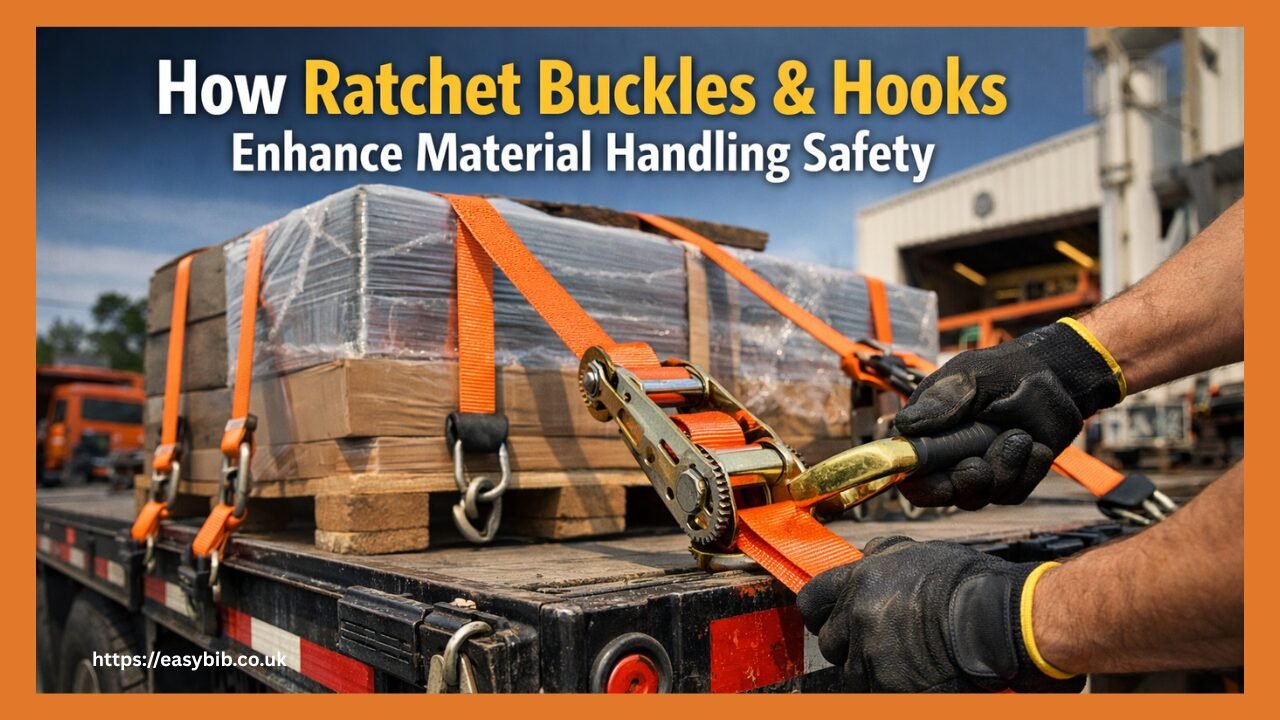
Moving materials safely depends on using the right equipment. Ratchet buckles and hooks work together to create a reliable cargo securement system that prevents loads from shifting during transport. These tools have become essential across industries like construction, logistics, and shipping because they offer strength and control that basic tying methods can’t match.
Ratchet straps with proper hooks let you apply consistent tension to secure your cargo without relying on physical strength alone. The ratchet mechanism locks the webbing in place, while hooks anchor everything to your vehicle or trailer.
How Ratchet Buckles and Hooks Enhance Material Handling Safety
Ratchet buckles and hooks work together to create a secure system that protects your cargo and keeps you safe during transport. These tools help prevent load shifting and reduce the physical strain of securing heavy items.
Improved Load Security in Transport
The ratchet mechanism locks your cargo in place with precision. When you tighten the strap, the internal gear system prevents any backward movement. This means your load stays exactly where you put it.
Each click of the ratchet adds tension to the webbing strap. You can achieve a much higher securing force compared to simple tie-downs. The hooks anchor firmly to your truck bed or trailer points, creating a complete restraint system that won’t slip loose during travel.
Enhanced Stability and Reduced Cargo Shifting
Proper tensioning keeps your items from moving during sudden stops or turns. The ratchet buckles let you apply consistent pressure across the entire load surface.
This stability matters most on long trips where road vibrations can loosen other fastening methods. Your cargo stays balanced and centered, which protects both the items you’re moving and other drivers on the road.
Operator Safety and Injury Prevention
Ergonomic ratchet designs reduce the physical effort you need to secure loads. Pull-down models let you use your body weight rather than just your arm strength. This reduces muscle strain and repetitive motion injuries when you’re securing multiple loads throughout the day.
Core Components: Ratchet Buckles, Straps, and Hook Types
Ratchet tie-down systems rely on three main parts working together: the buckle mechanism that creates tension, the webbing that holds your load, and the hooks that connect everything to your vehicle or trailer.
Overview of Ratchet Buckles and Their Mechanism
The ratchet buckle is a tensioning device that lets you tighten straps around your cargo. It works through a gear-and-pawl system that engages as you pump the handle.
When you thread your strap through the buckle and move the handle up and down, the gear grabs the webbing and pulls it tighter with each stroke. The pawl prevents the strap from loosening, which keeps your cargo secure during transport. You can only tighten the strap until you release the pawl by opening the handle fully.
Comparison of Hooks: Flat Hooks, J-Hooks, S-Hooks, and Snap Hooks
Different hook types work better for specific tie-down points. Flat hooks slide into narrow slots and work well with truck beds and trailers.
J-hooks wrap over edges and rails. S-hooks offer quick attachment on both ends and fit various anchor points. Snap hooks have a spring-loaded gate that closes automatically for extra security. Your choice depends on your anchor points and what you’re hauling.
Understanding End Fittings and Anchor Points
End fittings are the hardware pieces attached to the ends of your strap. Besides hooks, you might use D-rings or other connectors as needed. These fittings attach to secure anchor points on your vehicle, which are the designated tie-down points built to handle heavy loads.
Selecting the Right Ratchet Buckles and Hooks for Your Application
Choosing the right ratchet straps means matching working load limits to your cargo weight, picking durable webbing materials, and selecting hooks that fit your anchor points and protect your load.
Assessing Working Load Limit and Break Strength
Your working load limit (WLL) indicates the maximum weight a strap can safely support during normal use. This is different from breaking strength, which indicates the point at which a strap would actually fail.
Most straps have a break strength that’s 2 to 3 times higher than the WLL. For example, a strap with a 1,500-pound WLL might have a 4,500-pound breaking strength.
Always add up the WLL of all your ratchet straps to make sure it exceeds your cargo weight. If you’re hauling a 3,000-pound load, you might use two straps with 1,500-pound WLL each.
Choosing the Best Webbing Material and Strap Width
Polyester webbing is your best choice for most jobs. It stretches less than nylon and handles UV rays and moisture better.
Strap width affects how much weight you can secure:
- 1-inch straps: Light loads, pickup trucks, recreational gear
- 2-inch straps: Most commercial cargo and standard hauling
- 3-inch and 4-inch straps: Heavy machinery and industrial equipment
Wider webbing straps spread pressure across a larger area. This protects both your cargo and the strap itself.
Matching Straps and Hooks to Cargo and Environment
Your hook choice depends on where you’re attaching and what you’re hauling. Double J hooks work with thin trailer edges and D-rings. Flat hooks distribute weight better on flatbed rails.
Use vinyl-coated S-hooks for motorcycles or painted surfaces to prevent scratches. Snap hooks with safety latches keep connections secure even if your webbing loosens during transport.
Always use corner protectors when your cargo has sharp edges. Match your webbing material to your environment—polyester handles outdoor conditions better than other options.
Best Practices for Safe Cargo Securement and Tensioning
Getting the tension right and positioning your straps correctly makes all the difference between a secure load and potential cargo damage. These practices help you maintain load stability while protecting both your equipment and the materials you’re transporting.
Proper Strap Routing and Gradual Tightening
You should always thread your straps through the ratchet buckle smoothly without any twists or kinks. Twisted webbing reduces strength by up to 50% and creates uneven pressure points.
Pull out slack manually before using your tensioning device. This prevents the strap from bunching up and gives you better control. When you start tightening, work gradually across all attachment points rather than fully tensioning one strap at a time.
Use edge protectors or corner protectors wherever your strap contacts sharp surfaces. These simple additions prevent webbing cuts and distribute pressure more evenly across your cargo.
Avoiding Over-Tightening and Cargo Damage
Over-tightening is one of the most common mistakes in securing cargo. You only need enough tension to prevent shifting during transport.
Excessive force from your ratchet can crush cardboard boxes, dent metal surfaces, or crack wooden crates. Check your strap’s recommended tension limits and never exceed them. Most ratchet straps work best at 30-50% of their breaking strength.
Listen for creaking sounds from your cargo or watch for visual deformation. These are clear signs you’ve gone too far.
Ensuring Even Load Distribution and Load Stability
Load distribution directly affects how well your cargo stays put during turns, stops, and bumps. Place heavier items on the bottom and, when possible, center them over the axles.
Use multiple straps spaced evenly across your load rather than concentrating all tension in one area. For securing cargo longer than 10 feet, you typically need at least two attachment points. This prevents the load from pivoting or tipping during transport.
READ MORE
Maintenance, Inspection, and Storage Tips for Long-Term Safety
Regular care of your ratchet buckles and hooks keeps them working safely, whether you’re moving furniture or transporting goods. Proper inspection catches problems early, smart storage prevents damage, and knowing when to replace equipment protects your cargo.
Routine Inspection for Damaged Straps and Hooks
Check your tie-down straps before and after each use. Inspect the webbing carefully for any signs of wear, including fraying, cuts, or weakened areas. Inspect hooks for cracks, bends, or rust that could cause failure.
Test the ratchet mechanism to make sure it locks and releases smoothly. Damaged straps or bent hooks need immediate replacement. Even cam buckle straps and soft loops require the same attention.
Safe Storage to Prevent Wear and Degradation
Keep your ratchet straps in a dry, shaded area at cool temperatures, avoiding direct sunlight. UV rays break down webbing materials over time. Keep them in a plastic container or bag to protect against moisture and dust.
Never store wet straps, as this causes mold and rust. Make sure everything is completely dry first.
When to Replace Worn or Damaged Equipment
Replace straps showing any cuts, burns, or significant fraying. Discard hooks that are bent, cracked, or heavily rusted. If the ratchet mechanism won’t lock properly, get a new one.
Don’t try to repair damaged equipment. The cost of replacement is far less than the risk of cargo damage or injury.