
How to Use Legal Case Studies in Web Documentation to Showcase Real-World Scenarios
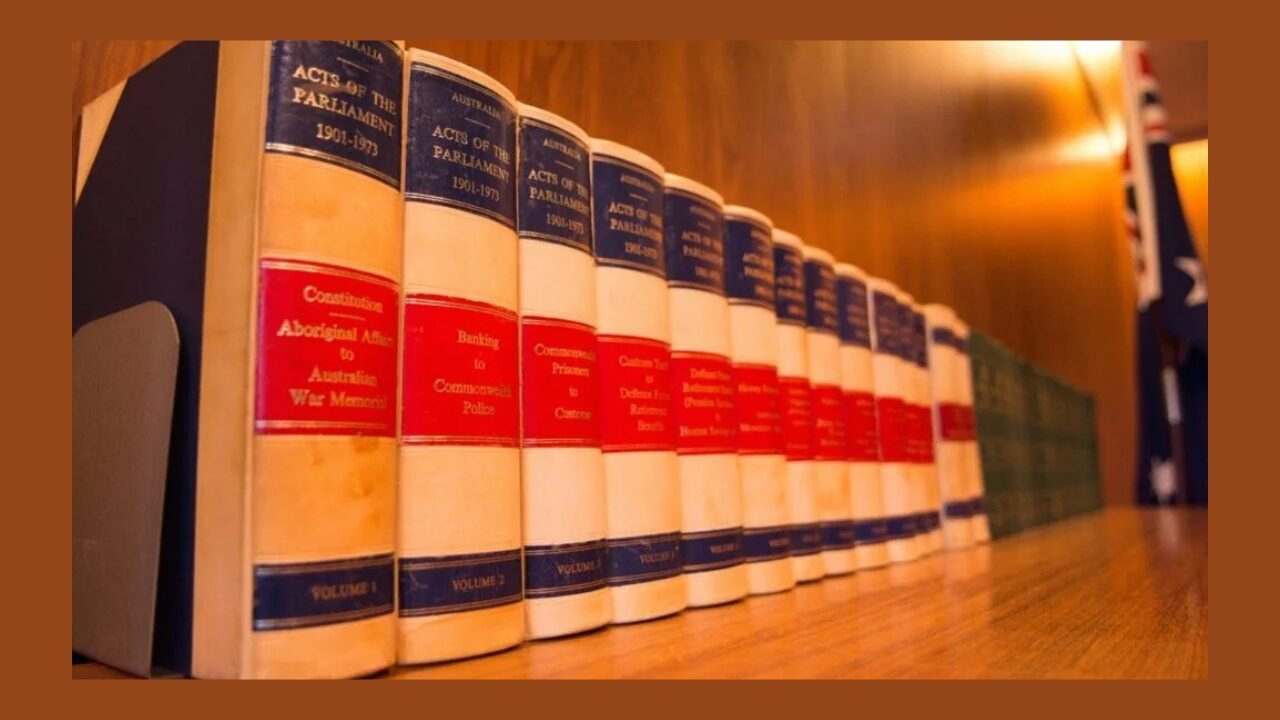
Legal content on the web has a bad habit. It either talks in vague abstractions that no scared human can relate to, or it dives into statute citations like everyone secretly went to law school.
Case studies are your way out of that trap. When done correctly, they turn “Section 11(e) rights” and “bail hearings” into something a person can actually picture: someone arrested on a Friday night, a panicked spouse trying to find surety, a Crown pushing for detention, a defence lawyer fighting for release.
But you’re not building a splashy marketing page. You’re maintaining documentation, support content, and policy explanations—it’s a whole different game.
Case Studies in Documentation: What They’re Actually For
Think of legal case studies in documentation as “scenarios that make the rules real.” Not success stories. Not brag reels. Explanations with teeth.
For criminal defence and bail work, that usually means walking through realistic pre-trial release scenarios: how bail works, what a surety is, what “reverse onus” looks like in practice, and what happens when someone breaches conditions.
On a law firm site, this might appear next to or within a practice-area page, such as a page describing how experienced bail hearings defence lawyers in Toronto handle pre‑trial release. On a product or internal documentation site, it might sit under “How we respond to criminal process” or “Law enforcement requests: example flows.” Same pattern, different stakes.
The goal is simple: let readers see what this looks like in the real world without turning your docs into unofficial legal advice or a client file dump.
First Constraint: Ethics, Confidentiality, and Not Getting Anyone Sued
You can’t discuss case studies until you determine what’s safe to share. Lawyers know this instinctively; documentation professionals sometimes learn the hard way.
Rule 1: Anonymize Like Paranoid You
Assume that if a motivated person with Google and two brain cells could re-identify the client, you’ve failed.
- Scrub names and initials. Use “our client,” “the accused,” “the applicant,” “the surety,” or first-name-only placeholders that aren’t traceable.
- Blur locations. “A Toronto-area court” or “an Ontario court” is usually plenty; you don’t need “Old City Hall, courtroom X.”
- Fuzz dates and timelines. “In 2023” or “recently” is usually enough. Don’t tie it to a public news story.
- Blend details from multiple matters. Composite scenarios are often safer and still realistic, but don’t claim they’re a single, actual file.
If you’re adapting real criminal files, always clear it with counsel first. Always. Docs teams don’t own that risk.
Rule 2: Kill the “Guarantee Vibe”
This is where law society rules and product risk collide. Case studies cannot read like “hire us, and you’ll get the same thing.”
Some simple patterns that keep you out of trouble:
- Use phrases like “in this case” and “this outcome depended on…”, not “we always” or “typically.”
- End with a clear caveat, e.g, “Outcomes depend on the specific facts, court, and charges in each case.”
- Stop short of promising results; describe what happened and why, not what will happen next time.
Readers will still infer capability and experience. You don’t have to spell it out like a billboard.
Rule 3: Aggressive Disclaimers (But Plain Language)
You want something short, blunt, and repeated wherever scenarios might be misread as advice.
Example disclaimer block you can reuse across documentation:
- “These scenarios are examples only. They don’t replace legal advice. Laws and outcomes vary by situation and jurisdiction. If you’re facing charges or a bail hearing, speak to a lawyer.”
Drop that near the top of any legal case study hub, and again below individual scenarios if your lawyers are extra nervous.
A Simple, Repeatable Case Study Structure (That Works on the Web)
Most teams understructure legal examples. Or they overstructure them into something no one wants to read.
Use a skeleton that works for both criminal defence websites and internal/external documentation:
- Context – who’s involved, what court/jurisdiction, what stage (e.g., “bail hearing in an Ontario court”).
- Facts – what actually happened in one short paragraph.
- Key legal issue – bail vs detention, reverse onus, Charter challenge, surety concerns, etc.
- Approach/strategy – what counsel or the organization did.
- Outcome – not just “win/lose,” but type of release, conditions, or next step.
- Takeaway – how the scenario helps a similar reader understand what might happen.
You don’t need perfect symmetry every time. But if you keep those six elements, your docs become skimmable and consistent.
Example Template (Copy This Into Your CMS)
Here’s a generic template you can reuse across your documentation set:
- Scenario title: First-Time Impaired Driving Bail Hearing in Ontario
- Context: Brief jurisdiction + court type + role (e.g., “Adult accused in the Ontario Court of Justice after weekend arrest.”)
- Facts: 3–5 lines: charges, relevant background (no record / prior breaches), personal situation (job, family, housing).
- Key legal issue: One sentence: “Whether the court would release the accused on reasonable bail conditions pending trial.”
- Our / the defence approach: Short bullet list:
- Proposed a specific surety (family member, stable employment).
- Prepared a bail plan with curfew and no-driving conditions.
- Addressed Crown concerns about public safety and re-offence.
- Outcome: 2–3 lines: “Released on bail with a curfew, no driving, and reporting conditions. Accused kept job and could attend treatment.”
- What this means for you: Plain-language takeaway, 2–4 lines, framed as “In similar situations, courts may…” not “You will…”
Use the same headings every time. Your future self—and your users—will appreciate it.
Designing Bail-Focused Case Studies That Actually Clarify the Process
Bail hearings are perfect for documentation-style examples because the process is confusing, high-stakes, and time-sensitive. People search for “what happens at a bail hearing in Ontario” because someone they love is in custody.
Your job is to show the flow without pretending every case turns out rosy.
Example Scenario 1: Reverse Onus Drug Case
Scenario: The accused faces serious drug trafficking charges and has prior breaches. The Crown seeks detention. Because of the offence category, this is a reverse-onus situation; the accused must show why release is warranted.
- Context: “Adult accused in Toronto charged with trafficking a controlled substance, appearing in the Ontario Court of Justice.”
- Facts: Prior record for possession, history of addiction, limited employment history, and strong family ties in the city.
- Key legal issue: Whether a strict bail plan could manage the risk in a reverse onus case.
- Defence approach:
- Proposed a surety with stable employment and no criminal record.
- Offered a house arrest bail plan with electronic monitoring.
- Filed materials on the accused’s treatment plan and community supports.
- Outcome: “The court granted bail with house arrest, electronic monitoring, and treatment conditions. The Crown’s detention request was rejected.”
- Takeaway: The reverse onus doesn’t automatically result in detention, but it usually requires a stricter plan and stronger supervision.
See how that reads? Clear, specific, and educational without naming names or promising miracles.
Example Scenario 2: Domestic Assault With No-Contact Conditions
Scenario: An accused is charged with domestic assault after a dispute with a partner. Both want to resume contact, but the Crown is worried about safety and pressure on the complainant.
- Context: A domestic assault charge following a dispute in a shared home in Ontario.
- Facts: No prior record; both parties employed; children in the home; complainant seeking court approval for contact.
- Key legal issue: How to balance safety and the family’s desire to live together.
- Defence approach:
- Proposed a third-party surety and an initial no-contact order.
- Requested a review date once counseling and programming began.
- Submitted information about counseling, safety planning, and child-care arrangements.
- Outcome: The court granted release with a temporary no-contact condition and scheduled a review upon documentation of counseling progress.
- Takeaway: Domestic cases often involve layered conditions and reviews; release doesn’t always mean everyone returns to normal.
That’s what readers need to see: the tradeoffs, not the heroics.
Translating Legal Jargon Without Dumbing It Down
Legal concepts around bail and pre-trial rights are notoriously opaque. Section 11(e) of the Charter? Primary, secondary, and tertiary grounds? Nobody outside the profession speaks that way.
So you translate. Not into baby talk, into everyday, working-adult language.
Three Jargon-Translation Patterns That Work
- Define, then drop the label. “The court looks at three main things: will the person show up, will anyone be at risk, and will public confidence be shaken. Lawyers call these the primary, secondary, and tertiary grounds.” Then keep using the plain version.
- Explain the effect, not the Latin. Instead of “reverse onus,” “In some cases the default flips, and the accused has to convince the court they should be released, instead of the Crown convincing the court to keep them in.”
- Use short, factual “asides.” “(Under Canadian law, people generally have a right to reasonable bail, unless there’s a strong reason to detain them.)”
Then use your case studies to demonstrate how those concepts work in practice. One example per big idea beats a half-page of definitions.
Where to Put Case Studies in Web Documentation
Most teams make two mistakes: they either dump all their examples in a giant “case results” graveyard, or they sprinkle them randomly like seasoning with no pattern.
You’re better off treating scenarios as reusable components and placing them where a reader naturally starts asking, “But how does this play out?”
Bright Placement Patterns for Law Firm Sites
- Practice-area pages. On a bail hearings page, add 2–3 short “Bail Scenario” callouts: different offence types, different risk profiles.
- Offence-specific pages. “Impaired Driving,” “Domestic Assault,” “Drug Offences,” “Sexual Assault,” and “Homicide/Manslaughter” each get one or two bail scenarios tailored to that context.
- Dedicated case study hub. Group longer, narrative-style case studies by category (bail, trial, appeals) for readers who want depth.
- FAQ and support-style doc pages. For questions such as “What happens at a bail hearing?” or “What is a surety?”, include one clear scenario to make the concept tangible.
The pattern is simple: explanation block → short scenario → optional deeper link.
Patterns for Product, Policy, or Internal Docs
If you’re not writing for a public law firm site but for internal or SaaS documentation, you steal the same basic position, but change the framing.
- Use “Example scenario” boxes next to policy text about handling subpoenas, preserving logs, or responding to law enforcement.
- Tag them by role: “For support agents,” “For legal ops,” “For security engineers.”
- Link scenarios to related procedures (“See: Handling urgent law enforcement requests on weekends”).
Different audience, same craving: “Show me how this looks on a Tuesday when everything is on fire.”
Internal Linking and CTAs Without Turning Docs Into an Ad
Docs aren’t landing pages, but they’re also not a no-CTA zone, especially on law firm sites where someone reading about bail is usually in crisis mode.
Natural Anchor Text That Doesn’t Feel Spammy
Link to your scenarios in a way that sounds human, not as if an SEO tool wrote it. For bail content, anchors like:
- “experienced bail hearings defence lawyers in Toronto”
- “urgent help with a bail hearing”
- “bail plan and surety strategy”
Work far better than stuffing pure keywords or generic “click here” links. The anchor should feel like a phrase you’d actually say out loud.
CTA Placement That Respects the Reader
Two locations tend to work best in documentation-style content:
- After a high-stress scenario. Example: After describing a weekend bail hearing in which release was critical, add a brief line: “If you or a family member is waiting for a bail hearing right now, contact us for urgent advice.”
- At the bottom of a section, not mid-paragraph. Doc readers hate being interrupted by sales copy mid-sentence.
Keep it minimalist. One CTA per scenario or per page is often plenty.
Consistent Formatting So Your Library Doesn’t Become Chaos
One or two nicely written examples are easy to maintain. A full library across a site or product is where entropy kicks in.
Lock a Reusable Pattern in Your Design System
Create a reusable “Case study” or “Scenario” component in your CMS or design system. Give it:
- A clear label (“Scenario,” “Example case,” “Bail case study”).
- Standard subheadings (Context, Facts, Key issue, Approach, Outcome, Takeaway).
- Optional metadata: offence type, court level, jurisdiction, year.
Then insist future writers and editors use that component instead of inventing their own one-off layouts.
Tag and Categorize Aggressively
On anything beyond a tiny site, you want filters:
- By offence type: impaired driving, domestic assault, drug offences, sexual offences, homicide.
- By stage: bail, trial, appeal, bail review.
- By audience: accused, family/surety, legal ops, internal team.
That way, when the law changes or your practice focus shifts, you know precisely which scenarios to rewrite instead of hunting through a jungle of half-remembered posts.
Keeping Legal Accuracy Without Turning Your Docs Into a Treatise
This is the hardest line: accurate enough that no lawyer winces, but direct enough that a stressed parent can follow along at 11:30 p.m. on their phone.
Short, Cited Where It Matters
For documentation, you don’t need to cite every case, but you should be clear on the major guardrails:
- Acknowledge that Charter rights (like the right not to be denied reasonable bail without just cause) exist, without trying to teach every nuance.
- Clarify that provincial procedures differ; an Ontario bail hearing isn’t identical to one in another province or country.
- Avoid bold claims like “you will be released if…”; stick to “in some cases, courts may…”
When in doubt, shorten. One accurate sentence beats five squishy ones.
Patterns for “Non-Advice” Language
Here are some phrases that keep things informational, not prescriptive:
- “In many Ontario bail hearings, the court considers…”
- “In this example, the accused was released because…”
- “People in similar situations often want to know…”
- “This scenario shows how a strict bail plan can address risk concerns.”
They describe patterns without telling anyone what they personally should do on their own file.
Example: A Full Bail Case Study Written as Documentation
Here’s how all of this looks when you put it together. You can lift this structure directly into a help center article, a law firm practice page, or internal legal ops docs.
Scenario: Weekend Bail Hearing for Impaired Driving Charge
- Context
An adult accused in Ontario was arrested late Friday night for impaired driving and over 80 and held for a Saturday bail hearing in the Ontario Court of Justice. - Facts
The accused had no prior criminal record, steady employment, and shared custody of a young child. The breath readings were significantly over the legal limit. The accused’s partner was prepared to act as surety. - Key legal issue
Whether the accused could be safely released on bail with conditions that addressed public safety and the risk of re-offending, given the seriousness of impaired driving. - Defence approach
- Proposed the partner as a surety with a clear understanding of their responsibilities.
- Offered a no-driving condition and a nightly curfew tied to work hours and child-care duties.
- Provided information about the accused’s plan to start an alcohol education and treatment program.
- Outcome
The court released the accused on bail, subject to a curfew, a ban on driving, and supervision by the surety. The accused kept their job and began treatment before trial. - What this means for readers
In some first-time impaired driving cases, courts may agree to release on bail if there’s a workable supervision plan and strong ties to the community. Conditions often focus on preventing further impaired driving and ensuring court attendance.
That’s documentation: short sections, plain language, scenario-first, and no hard sell.
READ MORE
Maintaining and Evolving Your Case Study Library
Once you’ve got your pattern down, the real work is keeping it relevant. Laws shift, courts change how they treat certain offences, and your own processes evolve.
- Review on a schedule. Pick a cadence, say, every 6 or 12 months, to audit scenarios for outdated law or process.
- Pin “evergreen-ish” topics. Bail basics and Charter rights change more slowly than, say, jurisdiction-specific procedural tweaks. Keep those in dedicated, long-lived examples.
- Add new patterns, not just new stories. If you realize you’re missing a youth bail scenario or a bail review example, fill that gap explicitly rather than adding one more version of the same impaired driving case.
Over time, you end up with a set of scenarios that cover the full range of situations your readers encounter, organized, anonymized, and actually helpful.