
Understanding CNC Machining: 3, 4, and 5-Axis CNC Machining
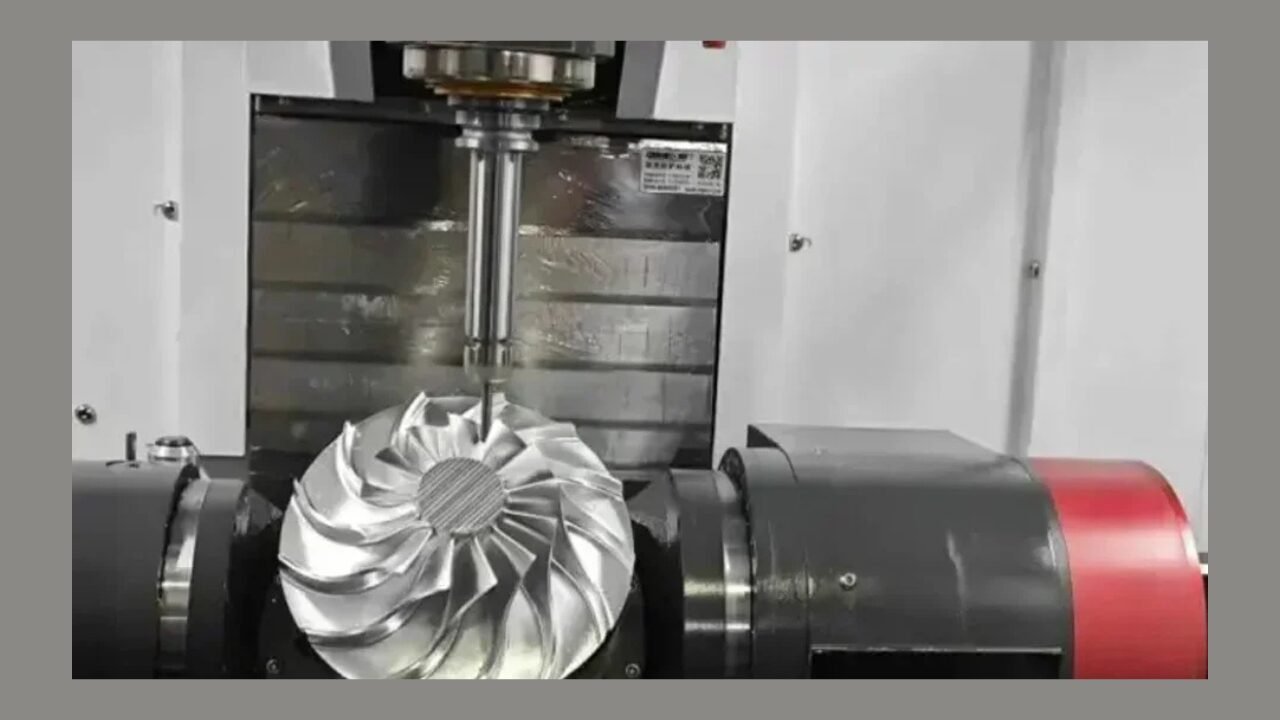
CNC machining involves the use of Computer Numerical Control (CNC) machine tools to shape and resize a piece of material (known as the workpiece) by automatically removing material. Typically, the materials used are plastics or metals; once the removal process is complete, the finished part or product is produced.
This process is also known as subtractive manufacturing. In CNC machining, computer applications control the movement of the machine tool.
Common Types of CNC Machines
The CNC machining process most commonly includes milling and turning, followed by grinding, electrical discharge machining (EDM), and others.
Milling
Milling involves applying a rotating cutting tool to the surface of a workpiece while moving along 3, 4, or 5 axes. Milling essentially cuts or trims the workpiece, allowing for the rapid machining of complex geometries and precision parts from metals or thermoplastics.
Turning
Turning utilizes a lathe to manufacture parts containing cylindrical features. The workpiece rotates on an axis and comes into contact with precision turning tools to form circular edges, radial and axial holes, slots, and grooves.
Advantages of CNC Machining
Compared to traditional manual machining, CNC machining is significantly faster. As long as the computer code is correct and aligns with the design, the finished products possess high dimensional accuracy with minimal error. CNC manufacturing is an ideal method for rapid prototyping. It can also be used to manufacture end-use products and components, though it is generally cost-effective only in low-volume, short-term production runs.
Multi-axis CNC Machining
CNC milling involves removing material using rotating tools. Either the workpiece remains stationary while the tool moves onto the workpiece, or the workpiece enters the machine at a predetermined angle. The more axes of motion a machine has, the more complex its shaping process becomes and the faster its operation.
3-axis CNC Machining
3-axis CNC milling is one of the most common and widely used machining methods. In 3-axis machining, the workpiece remains fixed while the rotating tool cuts along the X, Y, and Z axes. This is a relatively simple form of CNC machining suitable for manufacturing products with straightforward structures. It is not ideal for machining complex geometries or products with intricate components.
Since cutting is only possible on three axes, machining speed may be slower than on a 4-axis or 5-axis CNC milling machine, as the workpiece may require manual repositioning to achieve the desired shape.
4-axis CNC Machining
In 4-axis CNC milling, a fourth axis is added to the cutting tool’s motion, allowing rotation around the X-axis. There are now four axes: X, Y, Z, and A (rotation around the X-axis). Most 4-axis CNC machines also allow the workpiece to rotate about the B-axis, enabling the machine to function as both a milling machine and a lathe.
If you need to drill holes on the side of a part or on the curved surface of a cylinder, 4-axis CNC machining is the optimal choice. It dramatically accelerates the machining process and offers high processing precision.
5-axis CNC machining
A 5-axis CNC milling machine features an additional rotation axis compared to a 4-axis CNC machine. The fifth axis is rotation around the Y-axis, also known as the B-axis. On some machines, the workpiece can also rotate, often called the B-axis or C-axis.
Because it is highly versatile, 5-axis CNC machining is ideal for producing complex, high-precision parts. Examples include medical components such as prosthetics or artificial bones, aerospace components, titanium parts, oil and gas machinery parts, and military products.
READ MORE
How LKprototype Can Help?
Established in 2009, LKprototype is a manufacturing platform that provides a comprehensive one-stop solution for your manufacturing needs. LKprototype specializes in high-precision CNC machining, vacuum casting, small- to medium-batch injection molding, sheet metal fabrication, and 3D printing. Our wide range of capabilities and ISO-certified quality control system enable us to serve diverse industries worldwide, delivering high-quality products that meet stringent international standards.