
Multilingual Keyword Research: A Practical Guide to Mapping Queries Across Markets
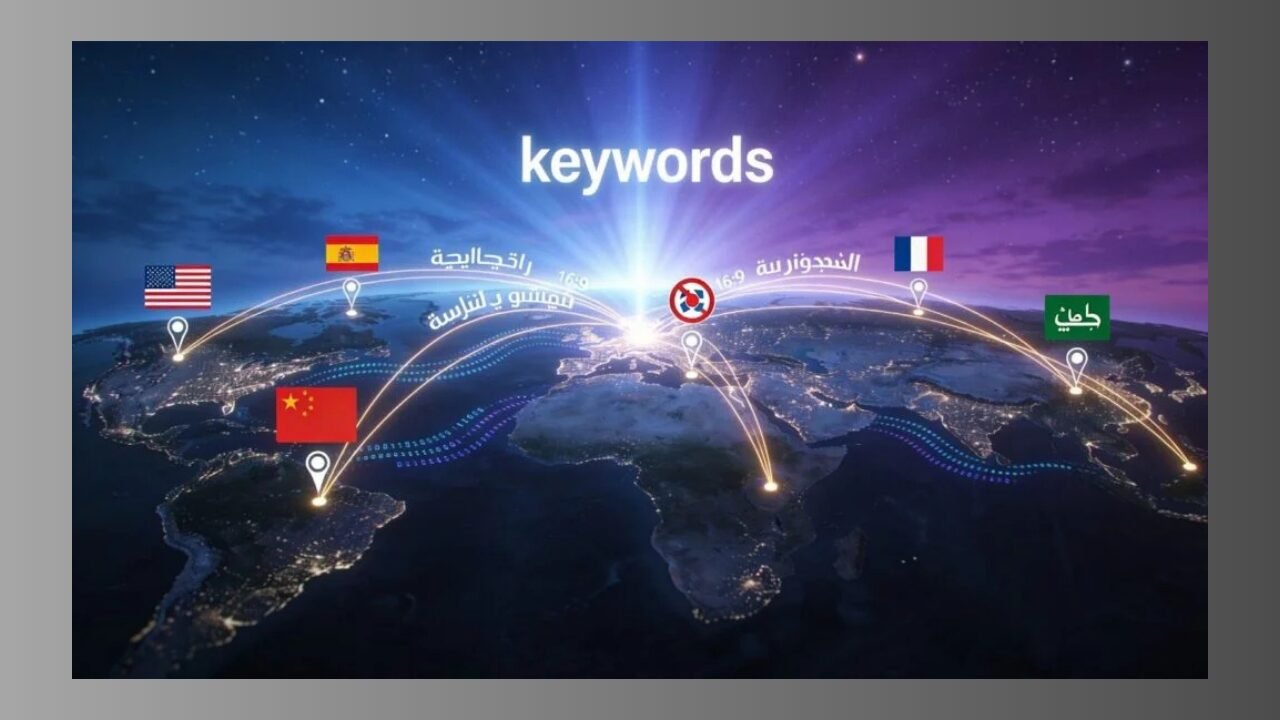
Most SEO teams make the same foundational error when expanding into new markets: they translate their existing keyword list and call it localization. This approach collapses under real-world conditions because search behavior is shaped by culture, language register, economic context, and the competitive landscape of each regional Google (or Baidu, or Naver) index. A user in Mexico City searching for a project management tool types different queries than a user in Madrid, even though both are searching in Spanish. Volume distributions, dominant competitor domains, featured snippet formats, and even the ratio of informational to transactional results differ meaningfully across these two markets. Effective multilingual keyword research treats each locale as its own starting point, not a derivative of a source-language campaign.
Building Your Localized Keyword Foundation
The most reliable method for seeding a multilingual keyword program is to use in-market data sources from the beginning. This means running Google Keyword Planner with geotargeting set to each country, pulling Search Console data filtered by country and language, and supplementing with regional autocomplete data scraped from local Google domains (google.de, google.co.jp, google.com.br, and so on). Autocomplete is particularly valuable because it captures the phrasing patterns that real users employ, not the phrasing that professional translators might produce.
Beyond raw keyword tools, lean on community and competitive signals. Forums, Reddit equivalents (Quora, Stack Exchange, Tipi.vn, Zhihu), and local review platforms reveal the vocabulary that buyers and researchers use when they are not aware anyone is listening. If you operate in e-commerce, product review sections in local languages are goldmines for long-tail discovery. For B2B products, LinkedIn content in target languages, local industry association publications, and translated analyst reports will surface the professional vocabulary your buyers use.
At the structural level, this entire process is underpinned by a commitment to web localization – the practice of adapting not just language but the full digital experience – including URL structures, content taxonomies, and site architecture – to fit the expectations of each market. Getting keyword strategy right is impossible if the underlying site structure cannot accommodate market-specific pages without creating duplicate content or diluting authority across unintended URL paths.
Intent Analysis Across Languages
Search intent is not preserved by translation. The word “cheap” in English skews toward bargain-hunting transactional intent; its closest German equivalent, “günstig,” often carries a more neutral comparative intent, appearing in both informational research and commercial queries. Before mapping any keyword to a page type, run an intent audit using the SERP itself as your primary data source.
For each candidate keyword in each locale, examine the top ten organic results and classify what Google is already serving: Are the results product pages, category pages, comparison articles, definitions, or forum threads? This SERP-level intent signal tells you what page type Google has already associated with that query in that region. Build a simple classification table with four columns: keyword, locale, intent type (informational/navigational/commercial/transactional), and dominant SERP format. Populate this by manually reviewing SERPs in each market, using a VPN or Google’s country-specific domain to ensure you see localized results rather than those biased by your IP location.
For teams working at scale, tools like Semrush, Ahrefs, and Sistrix offer country-level SERP data, but they are most reliable for English-language and major European markets. For Southeast Asian, Middle Eastern, and African markets, you will often need to supplement with manual analysis or partner with in-market SEO agencies who have access to local rank-tracking infrastructure.
Keyword Clustering for Multilingual Campaigns
Once you have a validated, intent-classified keyword list for each locale, the next step is clustering: grouping keywords that should be served by the same page rather than competing against each other. The standard approach is to cluster by shared SERP – if two keywords consistently return the same set of URLs in the top five results, they belong in the same cluster and should target the same page.
A practical workflow for this:
- Extract top-5 URLs for each keyword in each locale using a rank tracker or API-based SERP scraper.
- Calculate URL overlap between keyword pairs. If two keywords share three or more of their top-five URLs, classify them as co-clustered.
- Name the cluster by the keyword with the highest search volume or clearest commercial value.
- Assign a page type to each cluster based on the intent classification you completed earlier: cluster → page type → locale-specific URL.
The critical mistake to avoid is creating clusters based on semantic similarity alone without SERP validation. Two keywords might mean the same thing in English but behave entirely differently in Korean, where one triggers product listings, and the other triggers how-to articles. Always let the SERP decide.
SERP Comparison Across Regions
Direct SERP comparison across regions is one of the most underused tools in multilingual SEO. By placing the SERP for the same conceptual query side by side across two or more locales, you can identify gaps, opportunities, and structural differences that fundamentally change your content strategy.
Use a standardized SERP audit template that captures, for each locale: the top-ranking domains, whether a featured snippet appears and what format it takes (paragraph, table, list), whether People Also Ask is present and what questions appear, whether local pack results appear, and the average content length and format of top-ranking pages. Compare these audits between locales to answer three questions:
- Are you competing against different domain types? In some markets, aggregators and comparison sites dominate niches where direct brand pages rank well, while in others, they do not. If aggregators dominate, you may need a different page format to earn rankings.
- Does the featured snippet format differ? A market where featured snippets are predominantly tables requires a different on-page structure than one dominated by paragraph snippets.
- Are local competitors ranking for queries that international competitors dominate elsewhere? Local competitors ranking highly often indicates that Google prioritizes geographic relevance, which affects your hreflang strategy and whether you need a country-specific domain or subdirectory.
Mapping Keywords to Page Types: A Scalable Framework
With your clusters and intent data in hand, you are ready to build a keyword-to-page mapping document that scales across all target locales. Structure it as a master spreadsheet with the following columns: Cluster Name, Primary Keyword, Secondary Keywords, Locale, Search Volume, Intent Type, Assigned Page Type, Target URL, Existing Page (yes/no), and Content Gap Notes.
For landing pages (typically high-volume, commercial or transactional intent): assign one primary cluster per locale-specific landing page. The page headline, meta title, and primary H1 should reflect the exact primary keyword. Secondary keywords in the cluster should appear in subheadings, body copy, and structured data. Do not try to target multiple clusters on a single landing page – cluster dilution is the primary cause of “middle of the page” rankings that never break into the top five.
For product pages: map clusters that are tightly transactional and product-specific. In multilingual contexts, product page keyword mapping must account for product name localization – a product sold under different names in different markets should have distinct keyword strategies, not hreflang-linked translations of a single strategy.
For blog and educational content: map informational clusters. These pages support top-of-funnel discovery and often attract search volumes that landing pages struggle to compete with. A particularly effective structure is the hub-and-spoke model: one authoritative pillar page targeting the core informational cluster, supported by spoke articles that target long-tail informational sub-clusters. In multilingual campaigns, each locale should have its own pillar page that reflects the specific questions and vocabulary of that market’s informational searches, not a machine-translated version of the English pillar.
Building Scalable Multilingual URL Structures
The technical foundation of a multilingual SEO structure is the URL taxonomy. The choice among country-code top-level domains (ccTLDs), subdirectories, and subdomains has real-world implications for authority and maintenance. For most mid-sized companies, subdirectories on a root domain (example.com/de/, example.com/fr/) offer the best balance between authority consolidation and market specificity. ccTLDs (e.g., example.de, example.fr) offer the strongest geographic signal but require separate domain authority-building. Subdomains (de.example.com) offer technical flexibility but split authority in ways that are harder to manage.
Whichever structure you choose, implement hreflang tags correctly across all locale-specific pages. The most common hreflang error in multilingual campaigns is applying language-only tags (hreflang=”de”) when country-specific tags (hreflang=”de-DE”, hreflang=”de-AT”, and hreflang=”de-CH”) are needed to differentiate between German-speaking markets with meaningfully different search behavior and product availability. Audit your hreflang implementation with a tool like Screaming Frog or a custom crawler that validates bidirectional confirmation across all page variants.
Maintaining and Refreshing Multilingual Keyword Data
Localized keyword research is not a one-time project. Search behavior in any market shifts with economic conditions, platform changes, seasonal patterns, and competitive entries. Build a quarterly refresh cycle into your process: pull updated Search Console data filtered by locale, identify queries that have grown in impressions but receive no targeted page, and run new SERP analyses for your highest-value clusters to detect intent drift. In markets where you have a strong organic presence, prioritize refreshes around local events, regulatory changes, or product launches that may spike entirely new query patterns that your current page map does not cover.
The teams that build sustainable multilingual SEO programs treat localized keyword research as a living document rather than a launch deliverable. Each market will tell you something different, and the discipline of listening to those signals – rather than assuming that what works in English will work everywhere – is what separates international SEO programs that scale from those that stall.
READ MORE
Conclusion
Multilingual keyword research is ultimately an exercise in market empathy at scale. The technical frameworks – intent classification, SERP-based clustering, hreflang implementation, URL taxonomy decisions – are the scaffolding. Still, the underlying principle is straightforward: every market deserves its own research, its own page map, and its own content strategy built from the ground up around how real users in that region search.
The teams that get this right share a few common habits. They resist the shortcut of translation-first workflows. They use the SERP as their primary source of truth for both intent and page format. They maintain a living keyword map that evolves with each quarterly data refresh rather than treating launch as the finish line. And they build site structures that accommodate market-specific pages without creating technical debt, such as duplicate content or broken hreflang chains.
The payoff for this rigor is compounding. A well-structured multilingual SEO program does not just add traffic from new markets in linear proportion to the number of locales you add – it builds topical authority and domain trust that lifts performance across all markets over time. Start with your highest-opportunity locale, validate the full workflow from keyword discovery through to indexed, ranking pages, then replicate the system market by market. The process is repeatable precisely because it is grounded in data from each market, not assumptions carried over from wherever you started.