
Mongibello Etna: History, Eruptions, Geography, and Life
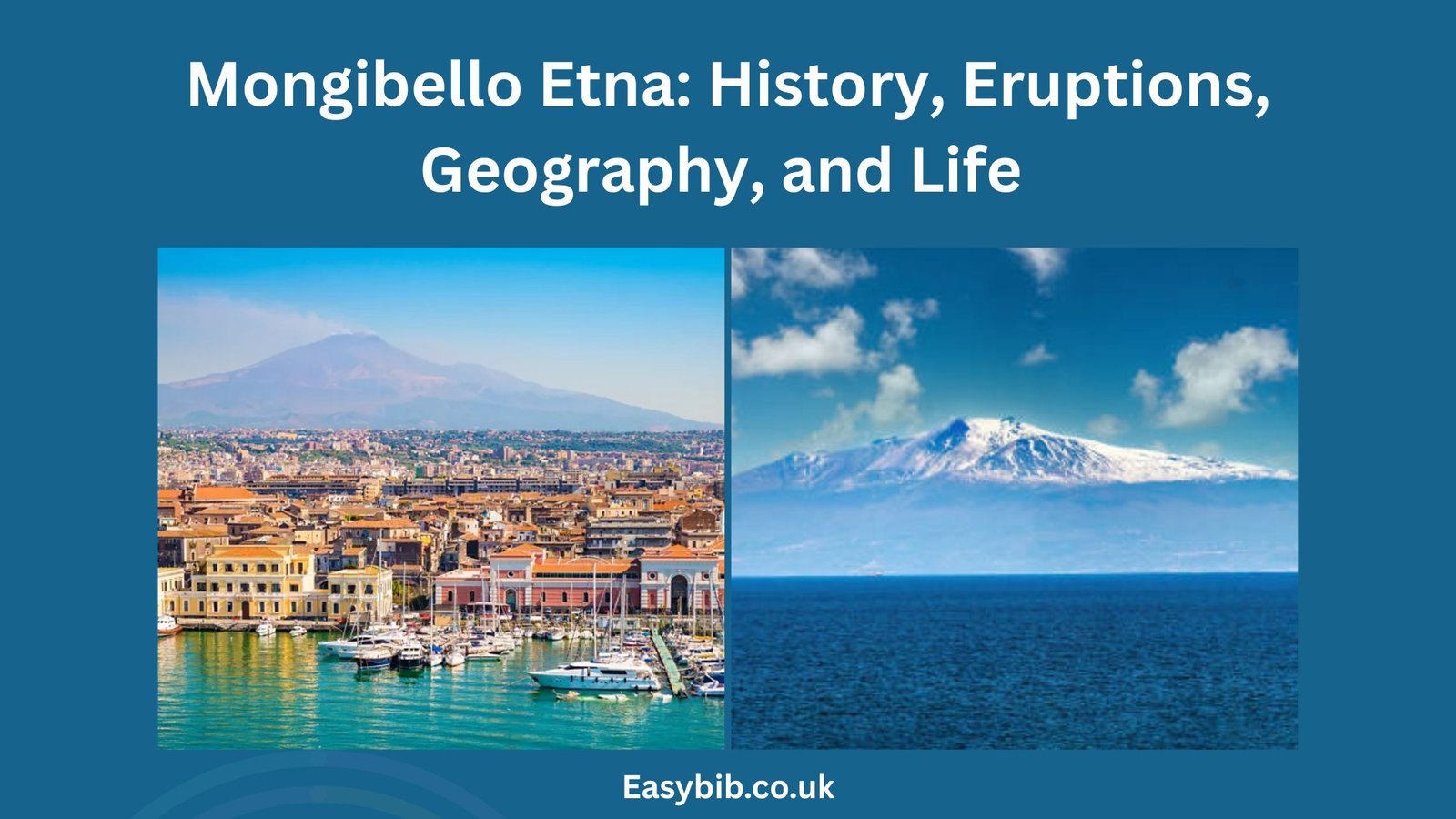
Mongibello is one of the most ancient and poetic names of Mount Etna, the powerful volcano that rises above eastern Sicily. For centuries, this name has been used by local people, travelers, and historians to describe the same mountain that the world now widely knows as Etna. The name Mongibello carries deep cultural meaning.
Mount Etna, or Mongibello, is one of the most active volcanoes on Earth. It has been erupting for hundreds of thousands of years. Its constant activity makes it both fascinating and dangerous. Yet, despite this danger, people continue to live and work on its slopes. Relationship between humans and the volcano is unique and deeply rooted in tradition.
Origin and Meaning of the Name Mongibello
The name Mongibello has a very special origin. It is believed to come from a combination of two words from different languages. The Latin word mons means mountain. The Arabic word jabal also means mountain. When Sicily was under Arab rule, languages blended. Over time, these two words merged into Mongibello. The meaning became “mountain of mountains.”
This name shows how important the volcano was to every culture that encountered it. Each civilization gave it a name, but all recognized its greatness. Mongibello became a symbol of permanence in a land that constantly changed rulers.
Local Use and Cultural Identity
For local Sicilians, Mongibello is more than a historical name. It is a familiar presence. Many people simply call it “The Mountain.” This simple name shows respect and closeness. The volcano is always visible from far away. It dominates the skyline and reminds people of its power every day.
Geographical Setting and Physical Characteristics
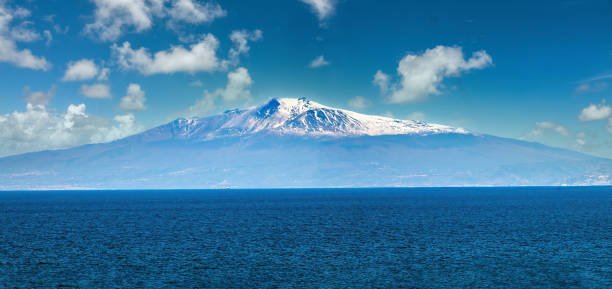
Mongibello is located on the eastern side of Sicily. It rises near the Ionian coast and stands between the cities of Catania and Messina. The volcano can be seen from great distances, including from the sea. Its slopes extend across a vast area and touch many towns and villages.
The location of Mongibello makes it especially dramatic. On one side, there is the deep blue sea. On the other, there are forests, lava fields, and fertile farmland. This contrast makes the landscape around the volcano unique.
Size, Height, and Shape
Mongibello is the tallest active volcano in Europe. Its height is not fixed. Each eruption can change it slightly. Lava flows can build new layers, while collapses can reduce its height. On average, it rises more than 3,300 meters above sea level.
The volcano is a stratovolcano. This means it is built from layers of lava, ash, and rock. These layers tell the story of countless eruptions. Over time, they created a massive and complex structure with many craters and fissures.
Volcanic Structure and Activity
At the summit of Mongibello, there are several craters. These craters are not permanent. Some become inactive, while new ones form. Lava can emerge from the summit or from cracks on the sides of the volcano.
Lava flows from Mongibello are usually slow-moving. This allows people time to evacuate when necessary. However, the lava can destroy everything in its path. Entire villages have been damaged or buried in the past.
Eruptions Through History
Mongibello has one of the longest recorded histories of volcanic activity in the world. Eruptions have been described since ancient times. Some eruptions lasted for years. Others were short but intense.
Most eruptions are not extremely explosive. They release lava fountains, ash, and gases. Still, ash clouds can affect air travel and daily life. The volcano’s frequent activity makes it unpredictable but also valuable for scientific study.
READ MORE
Impact on Environment and Agriculture
One of the greatest gifts of Mongibello is its soil. Volcanic ash and lava break down over time and create mineral-rich earth. This soil is extremely fertile and supports a wide range of crops.
Vineyards grow on ancient lava flows. Olive trees and citrus orchards thrive on the lower slopes. The area around the volcano is famous for high-quality wine. Farmers have learned to work with the land, even though it was shaped by fire.
Natural Ecosystems
Different elevations on Mongibello support different ecosystems. Lower slopes have farmland and Mediterranean vegetation. Higher up, forests of chestnut and pine appear. Near the summit, the land becomes barren and rocky.
This variety creates a rich natural environment. Many plant and animal species have adapted to life on the volcano.
Human Settlements and Daily Life
Thousands of people live on the slopes of Mongibello. Towns and cities exist very close to lava paths from past eruptions. Living here requires constant awareness.
People accept the risks because the land provides opportunities. Agriculture, tourism, and local traditions are closely tied to the volcano. Life continues despite the danger.
Adaptation and Safety
Modern technology helps reduce risk. Monitoring systems track earthquakes and magma movement. Authorities prepare emergency plans. This allows people to live with more confidence near the volcano.
Cultural and Mythological Importance
In ancient times, people believed Mongibello was the home of gods and giants. Fire and smoke were seen as signs of supernatural activity. These myths helped explain natural events that people did not understand.
Stories about the volcano appear in ancient literature and art. They show how deeply Mongibello influenced imagination and belief.
Symbol of Sicilian Identity
Today, Mongibello remains a powerful symbol. It represents strength, endurance, and constant change. It appears in local art, music, and poetry. For many Sicilians, it is a source of pride.
Scientific Importance and Research
Mongibello is studied by scientists from around the world. Its frequent eruptions provide valuable information. Researchers study lava chemistry, seismic activity, and gas emissions.
The volcano helps scientists understand how volcanoes work globally. Knowledge gained here improves safety near other active volcanoes.
Monitoring and Observation
Advanced instruments monitor Mongibello day and night. This helps predict eruptions and protect nearby populations. Science plays a key role in living safely with the volcano.
Tourism and Modern Experience
Tourists visit Mongibello throughout the year. Guided tours allow visitors to explore craters and lava fields. Cable cars and vehicles help reach higher elevations safely.
In winter, snow covers the upper slopes. In summer, black lava contrasts with green landscapes. Each season offers a different view.
Economic Importance
Tourism provides income for local communities. It supports hotels, guides, and local businesses. Mongibello is a major attraction that connects nature, culture, and economy.
READ MORE
Conclusion
Mongibello Etna is not just a volcano. It is a living force that shapes land, history, and people. It gives fertile soil and demands respect and inspires fear and admiration at the same time. For Sicily, Mongibello is eternal. It continues to erupt, change, and remind humanity of the power of nature.