
How to Choose the Best Educational Toys That Support Montessori Learning at Home
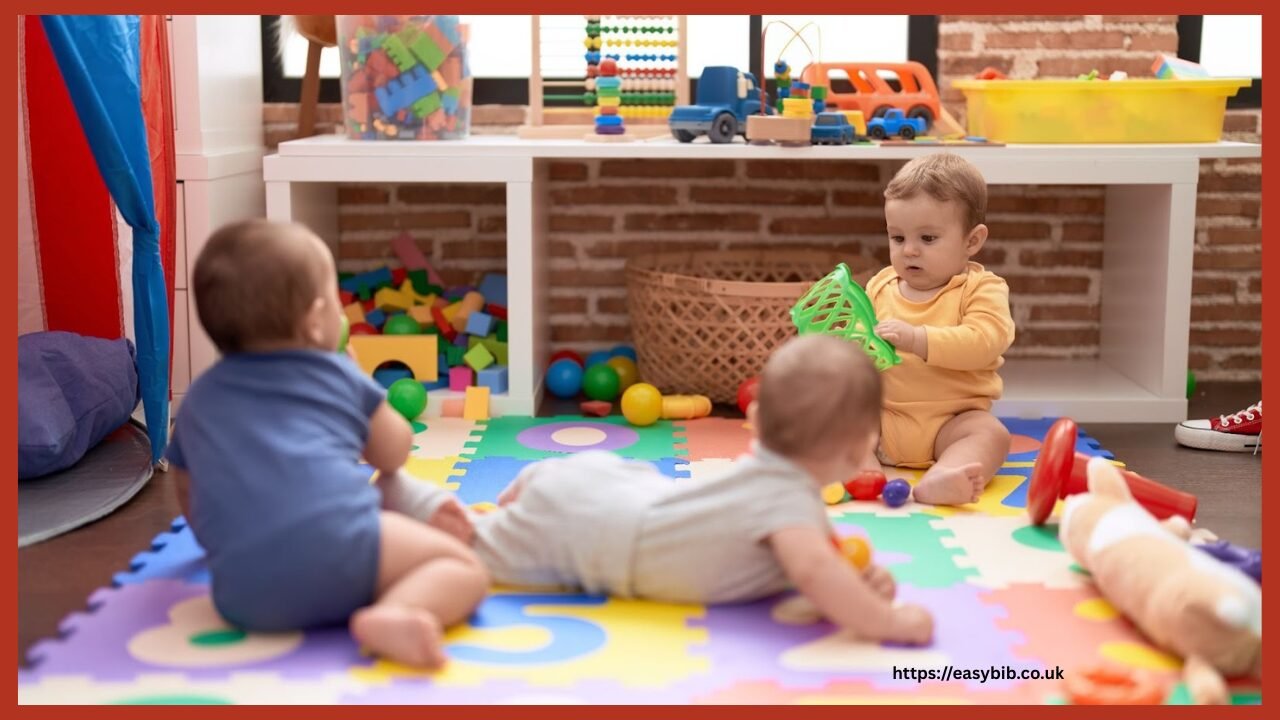
If your living room looks like a toy store exploded inside a laundry basket, you’re not alone. Most parents don’t have a “toy problem.” They have too much wrong stuff.
Montessori flips that on its head. Fewer toys. Simpler toys. Toys that actually build real-life skills instead of just lighting up and playing the same song until your eye starts twitching.
And if your child is already in (or you’re considering) a Montessori daycare or preschool in the Toronto/Vaughan area, it helps a lot when home toys align with what happens in the classroom. That’s precisely how licensed centres like Cozy Time Montessori Academy approach materials: every object is selected intentionally, not just because it’s cute on a shelf.
Let’s strip away the marketing noise and walk through how to choose educational toys that actually support Montessori learning at home, without needing a diploma in child development or a ridiculous budget.
First: What Makes a Toy “Montessori-Aligned” Anyway?
Not every wooden toy is Montessori. That marketing trick is everywhere right now. A neutral-coloured, wooden toy doesn’t automatically align it with Montessori philosophy.
Montessori-style materials usually do a few specific things:
- Build one evident skill at a time – This is called “isolation of difficulty.” A toy might focus on size, colour, or hand–eye coordination. Not all at once.
- They are based on reality – Real animals, fundamental tools, and real-life objects. Not unicorns stirring glitter soup in a rainbow kitchen… fun, but not Montessori.
- Invite hands-on exploration: the child manipulates, moves, pours, stacks, and matches. They’re not just pressing a button and watching a performance.
- Let the child see their own mistakes – Many Montessori materials are “self-correcting.” If something doesn’t fit, you don’t need to step in and say, “No, like this.” The material does the teaching.
- Support independence – Child-sized, easy to carry, simple to put away. The goal isn’t to keep you busy; it’s to let your child function more independently.
That’s the mental filter you want when evaluating toys online or in-store. Forget the “Montessori-inspired” tag for a second and ask: what is this actually helping my child do?
A Quick Montessori Toy Checklist You Can Use Anywhere
You don’t need to memorize the full Montessori curriculum. You need a basic checklist in your head. Something you can run through in 10 seconds while doom-scrolling toy reviews.
Ask yourself:
- Is it overstimulating or straightforward?
Does it have lights, songs, voices, six languages, and a seizure-inducing colour scheme? Or is it visually calm, with a single primary task? - What real skill does it build?
Can you name the thing it’s helping: pouring, matching, stacking, counting, twisting, language, balance? If not, skip it. - Can my child be active rather than passive?
Do they move their body and hands, or do they press a button and watch? Montessori leans hard toward active. - Does it invite focus, or chaos?
One straightforward task tends to lengthen concentration. Ten little pieces doing different random things usually shortens it. - Is it safe, durable, and real-feeling?
Wood, metal, glass (for older toddlers), fabric, cotton, materials that feel lifelike. Plastic isn’t automatically evil, but cheap, flimsy, noisy plastic usually is. - Can my child put it away independently?
If it needs adult-level engineering to reassemble after every use, it will live on your kitchen counter forever. You don’t need that.
If a toy meets most of these criteria, it likely aligns with Montessori principles, even without a Montessori label.
How Many Toys Do You Actually Need?
Short answer: way fewer than you own right now. Almost guaranteed.
Montessori classrooms don’t have mountains of toys. They have a curated, intentional set of materials. Everything has a spot. Everything has a purpose. And kids thrive in that clarity.
At home, a solid rule of thumb:
- Babies (0–12 months): 4–6 toys accessible at once
- Toddlers (1–3 years): 6–10 activities on a low shelf
- Preschoolers (3–6 years): 8–12 well-chosen activities, plus some books and art supplies
The rest? Rotate. Put extras in a bin in a closet, not as punishment, but as backup. When your child loses interest in a few things, replace them. Old toys feel new again after a couple of weeks away.
Less visual clutter = more actual play. Kids can’t focus if their environment screams at them from every angle.
Age-by-Age: Montessori-Friendly Educational Toys That Actually Get Used
For Infants (6–12 Months): Start With Simple Sensory & Movement
Babies don’t need much. They’re already working overtime just processing the world. The right materials are gentle invitations, not entertainment shows.
Look for:
- Grasping toys: wooden rings, simple rattles, fabric balls
- Mobiles: high-contrast early on, then ones that show colour and depth (hung safely out of reach)
- Rolling items: a wooden cylinder that rolls slowly, soft balls that they can chase
- Soft books: with clear, authentic images (animals, everyday objects), not just wild patterns
Skills you’re supporting: hand–eye coordination, tracking with their eyes, reaching, rolling, and early cause-and-effect. That’s plenty. No baby needs a toy that quizzes them on shapes in three languages.
Young Toddlers (12–24 Months): Building Object Permanence and Early Problem-Solving Skills
This is when you see that classic toddler phase: open, dump, repeat. Drawer? Dump. Basket? Dump. Box? Dump. Drives adults crazy, but it’s a real developmental job.
Good Montessori-aligned toys for this age:
- Object permanence box: ball goes in, disappears, reappears in the tray—pure magic to a 1-year-old.
- Chunky puzzles with knobs: 3–5 pieces, realistic images, not cartoon faces with googly eyes.
- Simple stackers: rings on a dowel, cups to nest, boxes to stack.
- Posting activities: placing coins (or wooden discs) into a slot in a box, then opening the box to retrieve them.
- Practical life basics: a small jug and bowl for supervised water pouring, a little spoon with beans, a tiny hand broom, and a dustpan.
Here, you’re feeding their urge to repeat. You’re letting them solve tiny problems. You’re also giving their hands real work, which helps regulate their whole nervous system much more than a loud toy that sings the alphabet on a loop.
Older Toddlers (Ages 2–3): Developing Sorting Skills, Matching Abilities, and Early Language
This is the prime Montessori age. Toddlers around two to three are desperate to “do it myself.” Half the meltdowns you see? That independence drive is being blocked or rushed.
Try toys and materials like:
- Sorting and matching sets: objects by colour, size, or category (e.g., farm animals vs. jungle animals).
- Two- or three-piece puzzles: with authentic images: vehicles, animals, household objects.
- Large beads for threading: on a shoelace or thick string.
- Language cards: realistic picture cards you can name and later match to small objects or figures.
- Practical life tools: child-sized mop, watering can, spray bottle with plain water, safe kitchen tools (banana slicer, egg slicer, butter knife with supervision).
Notice how many of these toys are… tools. Actual objects used in real work. Montessori doesn’t draw a huge line between “play” and “real life.” Watering plants is a legitimate activity, not an afterthought.
For Preschoolers (3–6 Years): Language, Early Math & More Refined Motor Skills
This is where classic Montessori classroom materials really shine, but you don’t have to recreate a full Casa classroom in your condo.
At home, you can focus on:
- More complex puzzles: 10–50 pieces, depending on your child, again with authentic images.
- Early math: simple counting beads, number rods, ten frames, board games that involve counting steps or matching quantities.
- Language: sandpaper letter-style boards or DIY versions, magnetic letters, story sequencing cards (first/then/last images).
- Sensorial play: sound-matching jars, fabric swatches to match by texture, rough vs. smooth boards, simple colour tablets.
- Gross motor gear: balance boards, stepping stones, low climbing structures, tunnels. Calm bodies learn better.
Kids at this age can handle more “closed-ended” materials too, things with a specific way they go together, alongside still having open-ended items like blocks.
Open-Ended vs. “One Right Way” Toys: How Montessori Uses Both
There’s a lot of worship of open-ended toys online. Blocks, loose parts, play silks, all that. They’re great, but they’re not the only solution.
Montessori materials often aren’t open-ended. A pink tower? There’s a specific order for stacking those cubes, from largest to smallest. Same for knobbed cylinders or number rods.
That’s on purpose. Those materials isolate a concept. Size. Weight. Volume. Quantity. The child can see, with their own eyes, what “bigger” and “smaller” look like precisely.
At home, a decent balance looks like this:
- Open-ended: blocks, animal figures, play scarves, plain wooden people, basic LEGO/Duplo, art materials.
- Closed-ended: specific puzzles, stacking towers, shape sorters, counting rods, simple sequence games.
You want both. Not just one giant bin of random stuff that does 50 things badly and nothing well.
Building a Montessori-Inspired Play Space (Even in a Small Condo)
You don’t need a dedicated playroom. You do need some order. That, more than any single toy, is what makes a space feel Montessori.
Start small:
- Low shelf, not a giant toy box.
A simple, low shelf gives each toy a visible “home.” Baskets and trays separate activities. Your child can see what’s there and put it back. - Keep only a few things out.
Six to ten activities, tops. The rest are held in storage, rotated as interest wanes. - Group by type.
One shelf for practical life, one for puzzles and problem-solving, one for art or language. Rough categories are enough. - Make it reachable.
If they can’t reach it, they can’t choose it. And if they can’t return it, you’re the one cleaning up forever.
That shelf is your “prepared environment.” Montessori classrooms put most of their magic into that environment. You’re just doing a home version, simpler, but following the same logic.
Safety, Quality & Budget: How to Avoid Wasting Money
Here’s where people stress out: “Real Montessori materials are so expensive.” Some are. You don’t need most of them.
Think in layers:
Non-Negotiable: Safety First
- Check for small parts; anything that can fit through a toilet paper roll is a choking risk for under-threes.
- Look for non-toxic finishes, especially for babies who mouth everything.
- For Canadian parents, stick with toys that meet Canadian safety standards and avoid sketchy no-name imports.
Quality Over Quantity
One solid wooden stacking toy that lasts all three kids is worth more than five flimsy plastic gadgets that crack and end up in a landfill. Durable doesn’t always mean pricey; it means well-made and simple.
Use Everyday Items as “Toys”
A lot of Montessori “practical life” work can be set up with stuff you already own:
- Small glass jars with lids to twist on and off
- Real spoons, tongs, and bowls for transferring beans or pom-poms
- Watering plants with an actual mini watering can
- Sorting socks by size or colour
- Spray bottle and cloth for wiping windows (water only)
Kids don’t care if something came from a toy store or a kitchen drawer. They care if it feels like real life and gives them a sense of responsibility.
How to Introduce and Rotate Toys Without Turning It Into a Project
You don’t need a spreadsheet. You don’t need a perfect schedule. You need to pay close attention.
Watch for these signs that a toy is ready to be rotated out:
- Your child walks past it for a week straight without a glance.
- They only use it to throw or scatter pieces; they don’t really engage with it.
- They’ve clearly mastered it, and it no longer challenges them.
When that happens, quietly swap 1–3 things on the shelf while they’re asleep or out. Don’t overhaul everything at once. You want some stability and some freshness, not constant change.
When you introduce something new:
- Show it slowly once, in silence if you can manage it.
- Do the activity from beginning to end, take it off the shelf, do the thing, put it back.
- Then step back. Literally. Let them take over and try.
Your job isn’t to comment and cheer every move like a sports announcer. Just be there, calm, available, not hovering.
Aligning Home Toys With Montessori Daycare or Preschool
If your child attends or will attend a Montessori daycare, you have a huge advantage: you’re not guessing in the dark. You can ask what they’re doing and replicate it at home on a smaller, lower-cost scale.
Some easy questions to ask their teachers:
- “What kinds of practical life activities are they really into right now?”
- “Which classroom materials do they naturally choose during activities?”
- “Are there easy at-home versions I can recreate?”
Say your toddler loves pouring beans at daycare. At home, you don’t need a fancy Montessori tray. Two little bowls, a scoop, and some dry lentils on a tray will do the job.
Same story for language and math. If their Casa classroom is working with sandpaper letters and counting beads, you can keep things aligned by offering:
- Magnetic letters for the fridge or a metal tray
- Simple counting activities with beads, buttons, or blocks
- Books and picture cards that use similar vocabulary (animals, everyday objects, community helpers)
That consistency between home and school is gold. Children feel grounded when the expectations and materials around them roughly match, whether they’re with you or in a licensed Montessori environment.
READ MORE
Red Flags: Toys That Say”Educational” But Don’t Really Help
If you want a quick mental “nope” list, here you go.
- Anything that does the playing for them.
You press a button, and it plays a whole show: flashing lights, music, voices, quizzes. The child becomes a spectator. - Overly branded character toys.
Frozen, Paw Patrol, whatever’s hot this year. They aren’t inherently evil, but they limit your child’s imagination to a scripted universe rather than letting them create their own stories. - Too many “skills” jammed into one object.
The toy promises math, music, languages, and social skills in one giant plastic cube. It usually delivers distraction, not depth. - Stuff that breaks in a month.
If it can’t survive a toddler using it as a drum once, it’s not worth your money.
You don’t have to ban these from your home like some strict regime. Just don’t let them dominate the space. Think of them as occasional treats, not the mainstay of the diet.
Bottom Line: Use Toys to Support Real Life, Not Replace It
Montessori learning at home isn’t about building a Pinterest-perfect playroom or buying a complete classroom set of materials. It’s about a few grounded questions:
- Does this toy help my child do something real, move, think, notice, concentrate?
- Can they use it mostly independently, without constant adult supervision?
- Does it live in a space that’s calm, ordered, and easy to navigate?
If you can answer yes to those, you’re already miles ahead of the “just buy what’s trending” game. Start with what you have, clear the clutter, add a few well-chosen pieces, and keep watching your child. They’ll show you, very plainly, what they’re ready for next.