
Angelina Jolie Brings Humanitarian Work into Creative Spaces
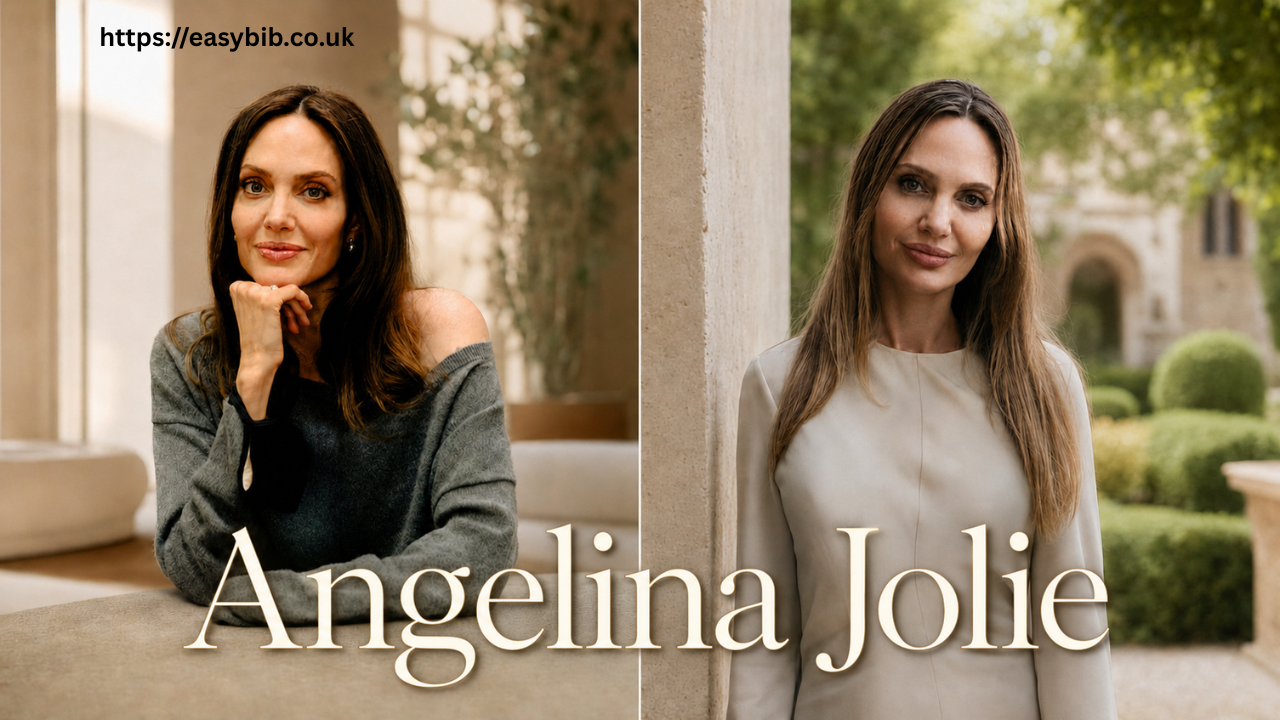
Angelina Jolie has spent much of her public life working across creative and humanitarian fields. She has worked across performance, direction and production while also supporting refugees, policy initiatives and postgraduate learning.
Those areas increasingly meet in projects built around collaboration, cultural exchange and community. Atelier Jolie is the clearest example. Rather than presenting it as a conventional celebrity fashion label, Jolie has described it as a place where artists, designers and makers can create, teach and share their skills.
More Than Two Decades of Refugee Advocacy
Jolie began serving as a Goodwill Ambassador for the UN Refugee Agency in 2001. She remained in that role until 2012, when UNHCR appointed her as Special Envoy. She served as Special Envoy until 2022, continuing her advocacy for refugees and people affected by forced displacement.
According to UNHCR, she completed more than 60 field missions during her years of service. The official record covers visits to communities experiencing forced displacement and humanitarian crises, giving her sustained contact with refugees, aid workers and local organizations.
Her formal association with the agency lasted more than two decades. In December 2022, Jolie and UNHCR jointly announced that she was stepping down as Special Envoy. The statement did not mark an end to her interest in refugee issues. She said she intended to address a broader range of humanitarian and human-rights concerns while continuing to support refugees and displaced people.
That distinction remains important. Angelina Jolie is now a former UNHCR Special Envoy, although refugee rights continue to form part of her public work.
Turning Field Experience into International Action
Jolie also participated in government-level efforts addressing sexual violence during armed conflict. On May 29, 2012, she and then UK Foreign Secretary William Hague launched the Preventing Sexual Violence in Conflict Initiative.
The program was created to increase international attention on sexual violence affecting women, men and children in conflict situations. Its priorities included reducing stigma, improving support for survivors and strengthening the ability of institutions and security services to prevent and respond to such crimes.
Jolie and Hague later co-chaired the Global Summit to End Sexual Violence in Conflict in London from June 10 to June 13, 2014. The gathering brought together governments, international organizations, survivors, campaigners and civil society groups for the same discussion.
Her role was not that of a sole administrator or policymaker. She worked as a co-founder, advocate and public representative alongside government officials, institutions and specialists. The official record supports her participation and leadership, although specific long-term policy outcomes require separate evidence beyond the summit itself.
Bringing Practical Experience into Education
Jolie carried part of that experience into an academic setting through the London School of Economics. LSE appointed her as a Visiting Professor in Practice connected with its Center for Women, Peace and Security.
The position recognized her practical expertise without placing her in a permanent academic role. Her involvement drew on her documented experience with refugee advocacy and the Preventing Sexual Violence in Conflict Initiative.
On March 14, 2017, she led a postgraduate class concerning women, peace and security. The session allowed students to consider the subject through experience developed outside the classroom, including engagement with humanitarian organizations, governments and communities affected by conflict.
This teaching role created a bridge between field experience and formal education. It also extended Jolie’s public work beyond speeches and campaigns by placing it within structured postgraduate study.
Building Atelier Jolie Around Collaboration
In 2023, Jolie and her daughter Zahara visited a historic building on Great Jones Street in New York and began developing the idea for Atelier Jolie. The project transformed the location into a creative space serving artists, designers and makers.
Its official program includes workshops, exhibitions, residencies and educational activities. Rather than restricting the project to finished clothing, Atelier Jolie provides opportunities for people to learn techniques, share knowledge and participate in creative events.
Jolie has been careful about how she defines her position. In a 2023 interview, she said she did not consider herself a fashion designer. Her stated intention was to create a platform where others could contribute their skills and receive recognition for their work.
That approach separates the space from a label that is mainly focused on its founder. Jolie remains closely associated with the project, but its public identity emphasizes co-creation and the people who lead its classes, exhibitions and residencies.
Zahara’s participation is part of the official project history, though the available record does not specify every responsibility she held. It is therefore accurate to describe their early involvement without assigning her an unsupported formal role.
Connecting Creativity with Community
Atelier Jolie presents creativity as a shared activity rather than a product developed behind closed doors. The space combines creative design, craftsmanship, visual arts, culinary activities, and learning under one roof.
As of July 2026, the official events program listed figure drawing, hand lettering, textile printing and culinary experiences. Its residency and exhibition programs also provided space for artists to develop their work and bring diverse subjects into public conversation.
Cultural exchange is visible in the range of makers and participants represented at the site. The café operating within the building has involved culinary talent from several countries, while classes and exhibitions have introduced visitors to varied artistic practices.
These activities align with Jolie’s stated preference for giving other creators room to work. They also provide a practical setting for collaboration, a recurring theme in her interviews about the project.
Atelier Jolie describes community, education, and international craft as central to its purpose. Its website confirms that these programs remained active in 2026, but it does not publish independently audited figures showing attendance, finances, or long-term environmental and social outcomes. The available records establish that the creative center remained active in 2026, but they do not measure its overall impact.
Expanding Her Role Through Production
Jolie has also expanded her creative responsibilities through production. In 2024, she joined a large Broadway producing team whose work received the Tony Award for Best Musical. The official Tony Awards record lists her among numerous credited producers.
That recognition documents her involvement in theatre production, but the public record does not allocate every responsibility among the team members. Her contribution is best understood as part of a collaborative production group rather than an individual production controlled by a single person.
More recently, Jolie worked as both a performer and producer on a project screened at the Toronto International Film Festival in 2025. During a June 2026 interview, she discussed its attention to women’s health, identity, work and human connection.
The production also allowed her to explore clothing as more than appearance. Jolie explained that what people wear can serve as a form of expression, protection, or concealment. She believes clothing can express identity while also concealing aspects a person prefers to keep private.
That perspective adds useful context to Atelier Jolie. Her recent producing work and the New York space are different projects, but both examine how creativity can connect individual experience with the work of a wider group.
Values Guiding Her Professional Decisions
Jolie has directly identified motherhood as the most important part of her life. During a November 2024 interview, she said it was also her greatest source of happiness.
Family responsibilities have affected the kinds of professional commitments she accepted. In an earlier interview, she explained that a change in her family situation prevented her from directing for several years. Instead, she chose shorter-acting assignments that allowed her to remain closer to home.
She did not publicly explain every aspect of those circumstances. Her comments establish that family needs influenced her schedule, but they do not support further conclusions about private relationships.
Privacy is another subject she has addressed directly. Jolie said her children generally did not want to be in front of the camera and noted that they had grown up without choosing public attention. She expressed hope that they would have greater privacy as they became adults.
Her recent comments about empathy provide another connection between personal values and creative decisions. In 2026, she spoke about remembering that every person may be carrying experiences that are not visible to others. She connected that idea with stories about health, identity and the different ways people present themselves.
Jolie expressed these views directly, so they are not based on outside interpretations of her character. They describe the principles she has publicly associated with family choices, collaboration and her current professional work.
Where Humanitarian Purpose Meets Creative Work
Angelina Jolie’s humanitarian and creative roles have not followed identical paths. Her UNHCR service involved formal advocacy for displaced people, while her policy work addressed sexual violence in conflict. Her LSE position brought practical experience into postgraduate education.
Atelier Jolie moves those interests into a different environment. Its classes, residencies, exhibitions and collaborative programs create space for artists and makers rather than operating as an international aid organization. The connection lies in Jolie’s emphasis on participation, cultural exchange, and giving others a platform.
Her producing work adds another dimension. It has allowed her to participate in group-led creative projects while exploring themes such as identity, health, work and human connection.
The verified record presents a career that now extends beyond performance. Jolie has moved between humanitarian institutions, education, production and community-based creative work while continuing to describe empathy and collaboration as important parts of her approach.